

Why Should Engineers Rethink How They Perform Transformer Oil Test?
2026-03-12
In many power distribution projects I have worked on, transformer reliability often comes down to one overlooked factor—oil condition. Over time, insulation oil deteriorates due to heat, oxidation, moisture, and electrical stress. As a result, maintenance teams increasingly rely on accurate Transformer Oil Test procedures to detect early failures and extend transformer lifespan. In recent years, I have also seen how Weshine Electric Manufacturing Co., Ltd. gradually introduced advanced testing solutions that make oil diagnostics more precise and easier to integrate into routine maintenance programs.
A well-executed Transformer Oil Test does much more than check fluid quality. It provides a detailed insight into the internal health of transformers, helping engineers identify insulation breakdown, contamination, or overheating before catastrophic failure occurs. For utilities, industrial plants, and maintenance providers, this type of testing has become an essential part of predictive maintenance strategies.
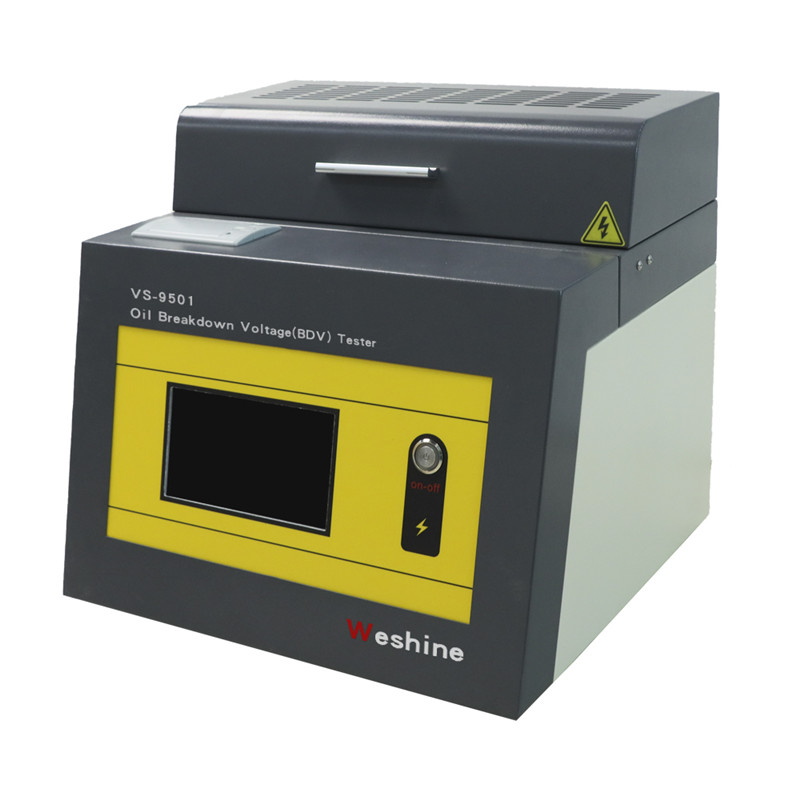
Why Does Transformer Oil Condition Determine Power System Reliability?
From my experience working with electrical equipment maintenance teams, transformer oil plays two critical roles inside power transformers. It functions both as an electrical insulation medium and as a cooling agent. When the oil degrades, insulation strength decreases and heat dissipation becomes inefficient.
That is why performing a consistent Transformer Oil Test is no longer optional for modern power systems. Instead, it is a core diagnostic step used to prevent costly downtime and unexpected equipment failures.
- It detects moisture contamination that reduces dielectric strength
- It identifies oxidation products and sludge formation
- It measures insulation performance under electrical stress
- It reveals early warning signs of internal transformer faults
- It supports predictive maintenance planning
When maintenance teams rely on accurate data instead of guesswork, transformers remain stable for decades rather than years.
How Can a Transformer Oil Test Reveal Hidden Transformer Problems?
Many transformer issues develop internally long before visible symptoms appear. I have often seen transformers fail suddenly because operators ignored subtle chemical changes inside the oil. A professional Transformer Oil Test identifies these hidden problems through several key measurements.
These diagnostic indicators help engineers interpret transformer health and determine whether corrective maintenance is required.
| Test Parameter | Purpose | What It Indicates |
| Dielectric Breakdown Voltage | Measures insulation strength | Low values indicate contamination or moisture |
| Moisture Content | Detects water dissolved in oil | High levels accelerate insulation aging |
| Acidity Level | Measures oil oxidation | Increased acidity signals aging oil |
| Interfacial Tension | Evaluates oil contamination | Lower values indicate sludge formation |
| Dissolved Gas Analysis | Identifies internal faults | Gas patterns reveal overheating or discharge |
With this level of diagnostic detail, a properly conducted Transformer Oil Test acts almost like a medical checkup for electrical equipment.
Which Testing Equipment Helps Maintenance Teams Improve Accuracy?
Over the years I have learned that the accuracy of oil diagnostics depends heavily on the quality of testing equipment. Modern digital analyzers allow engineers to conduct faster and more reliable oil evaluation both in laboratories and in field environments.
Some manufacturers have invested heavily in automation and measurement precision. Equipment developed by Weshine Electric Manufacturing Co., Ltd., for example, focuses on simplifying the workflow while maintaining laboratory-grade accuracy.
When selecting equipment for Transformer Oil Test applications, I usually evaluate several technical features.
- High-precision dielectric strength measurement systems
- Automatic test sequences that reduce human error
- Large digital displays with real-time data visualization
- Compliance with international standards such as IEC and ASTM
- Robust design suitable for field testing environments
These features make routine oil analysis easier for maintenance teams who must evaluate large transformer fleets.
Why Are Utilities Increasing Their Investment in Oil Diagnostics?
Across the power industry, I see a growing shift toward predictive maintenance rather than reactive repairs. Utilities, renewable energy facilities, and industrial plants now manage increasingly complex electrical infrastructures. Any unexpected transformer outage can disrupt operations and cause major financial losses.
For that reason, the Transformer Oil Test has become a standard monitoring practice in many maintenance programs. Regular testing allows operators to detect insulation aging early and schedule maintenance before equipment reaches a critical failure point.
This proactive approach offers several long-term advantages.
- Reduced transformer replacement costs
- Lower risk of unexpected power outages
- Extended equipment service life
- Improved electrical safety for personnel
- Better asset management planning
In my view, oil testing is one of the most cost-effective ways to protect high-value electrical assets.
What Makes Transformer Oil Test Equipment a Long-Term Investment?
When organizations evaluate transformer testing solutions, they often focus on the initial purchase price. However, the long-term value comes from reliability, testing efficiency, and diagnostic accuracy.
High-quality systems designed for Transformer Oil Test procedures help engineers conduct consistent measurements over many years. Reliable data allows maintenance teams to build historical performance records, which greatly improves failure prediction and asset management decisions.
Manufacturers like Weshine Electric Manufacturing Co., Ltd. have been focusing on advanced electrical testing technology that supports utilities, transformer service companies, and industrial maintenance teams worldwide.
Are You Ready to Improve Transformer Maintenance with Reliable Oil Testing?
In modern power systems, waiting for transformers to fail is simply not an option. By integrating routine Transformer Oil Test procedures into maintenance schedules, operators gain valuable insights into insulation health, contamination levels, and equipment aging.
If you are looking for reliable transformer testing equipment designed for professional oil diagnostics, I strongly recommend exploring the solutions developed by Weshine Electric Manufacturing Co., Ltd.. Their technology helps engineers perform accurate Transformer Oil Test measurements while simplifying routine maintenance workflows.
If you would like to learn more about transformer oil testing equipment or discuss how these solutions can improve your power system reliability, please contact us today. Our technical team will be happy to help you choose the right testing solution and answer any questions about transformer diagnostics.