

Why Does the Right Power Transformer Matter More Than Most Buyers Expect?
2026-04-07
When I evaluate electrical infrastructure for a project, I do not look at a transformer as just another box in the system. I look at it as the point where long-term stability, operating cost, safety, and future expansion all quietly meet. That is exactly why I pay attention to suppliers that treat product performance as a practical engineering issue rather than a sales slogan. As I learned more about Lugao Power Co.,Ltd, I found a manufacturer that approaches the Power Transformer category with a clear focus on reliability, controlled loss performance, and real-world application needs. For buyers who need dependable transmission and distribution equipment, that makes the conversation much more meaningful.
In many projects, the real challenge is not simply buying a transformer. The challenge is choosing a unit that fits the voltage level, installation environment, load profile, efficiency target, and maintenance expectations without creating hidden problems later. I have seen buyers struggle with overheating, unstable output, excessive maintenance, and installation mismatch because the product looked acceptable on paper but was not selected with enough depth. A well-matched Power Transformer helps avoid those problems before they start.
That is why I want to break this topic down in a way that feels useful to actual decision-makers. Instead of repeating generic product language, I will focus on the practical questions buyers really ask, the risks they try to avoid, and the advantages that make one transformer solution more valuable than another.
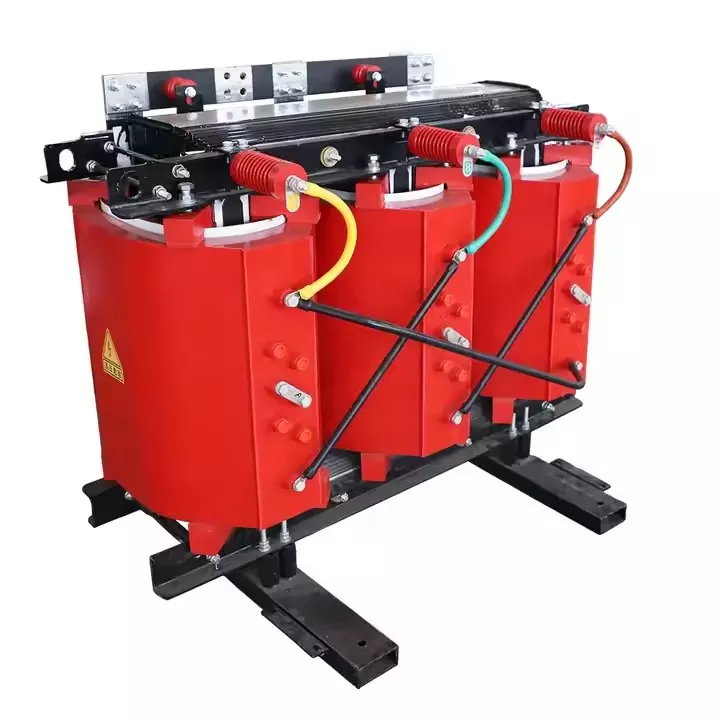
What Problems Am I Really Trying to Solve When I Buy a Power Transformer?
When I speak with procurement teams, EPC contractors, plant managers, or utility-side engineers, their concerns are usually more specific than “we need a transformer.” In reality, they are trying to solve a group of operational and commercial problems at the same time.
- They need stable voltage conversion without frequent performance fluctuation
- They want lower lifecycle cost instead of focusing only on the purchase price
- They need a unit that can work reliably in the actual installation environment
- They want reduced risk of insulation failure, overheating, or short-circuit damage
- They need confidence in testing, documentation, and production quality
- They want delivery and communication that do not slow down the project schedule
These concerns are completely reasonable. A transformer is deeply tied to the continuity of the wider system. If the selected equipment does not align with the project, the cost of delay, repair, or replacement can become much larger than the initial savings from a cheaper option.
| Buyer Concern | What It Means in Practice | Why It Matters |
|---|---|---|
| Operational reliability | Stable performance under normal and fault conditions | Reduces outage risk and protects connected equipment |
| Energy efficiency | Controlled no-load and load losses | Lowers long-term operating expenses |
| Thermal performance | Better control of winding temperature and insulation stress | Supports longer service life |
| Application fit | Correct structure for indoor, outdoor, industrial, or grid use | Avoids mismatch and premature wear |
| Testing confidence | Clear factory verification and quality inspection | Improves trust before shipment and installation |
| Project coordination | Responsive communication and manageable lead times | Keeps procurement and construction moving |
How Do I Know Whether a Power Transformer Is Built for Real Conditions Instead of Ideal Conditions?
This is where many buyers become more careful, and honestly, they should. A transformer may look strong in a brochure, but real confidence comes from how it is designed and verified for real service conditions. I always prefer equipment that is discussed in terms of performance behavior, not just dimensions and ratings.
In practice, real conditions can include load fluctuation, ambient temperature variation, insulation stress, switching events, fault current impact, and site-specific installation limitations. A dependable transformer should be able to face those conditions without becoming a weak point in the system.
From a buyer’s perspective, I look for several signs of seriousness:
- Attention to winding integrity and structural strength
- Reasonable heat control and insulation protection
- Consistent voltage ratio and electrical balance
- Loss performance that supports efficient operation
- Clear manufacturing and testing discipline before delivery
That is also why a supplier with broad experience in transmission and distribution applications can be valuable. The best solutions are usually shaped by repeated exposure to practical project demands rather than by purely theoretical product positioning.
Which Advantages Usually Separate a Better Power Transformer From an Average One?
When I compare transformer options, I do not start with appearance or price alone. I start with the things that affect operation after installation. In most serious projects, the stronger product is the one that reduces risk quietly over time.
The following advantages usually make the biggest difference:
- Reliable electrical performance that supports stable transmission and distribution
- Controlled heat rise that helps protect insulation and extend usable life
- Sound short-circuit resistance that improves resilience in demanding conditions
- Efficient loss control that supports lower energy waste over the service cycle
- Adaptability for utility networks, industrial systems, infrastructure projects, and renewable energy applications
- Manufacturing consistency that helps buyers feel safer about batch quality and delivery reliability
These benefits are not abstract. They directly influence maintenance planning, replacement timing, energy budgeting, and the confidence a contractor or end user feels after commissioning. A strong Power Transformer is not merely a product that works on day one. It is a product that continues to work well when the project stops being new.
What Should I Compare Before Choosing Between Different Transformer Suppliers?
I always recommend that buyers compare more than the quoted price. A transformer purchase affects operations for years, so a smarter comparison model usually saves more money and trouble in the long run.
| Comparison Point | What I Check | Why It Helps |
|---|---|---|
| Product range | Whether the supplier can support multiple application needs | Helpful for projects with different site conditions |
| Technical alignment | Voltage class, capacity, cooling method, and installation suitability | Prevents selection mistakes early |
| Quality verification | Testing process, inspection approach, and consistency | Improves confidence before shipment |
| Efficiency focus | Loss control and design discipline | Supports long-term value |
| Delivery capability | Lead time communication and supply flexibility | Reduces project delays |
| After-sales communication | Responsiveness to technical and commercial questions | Makes procurement easier and safer |
In my experience, good buyers also ask themselves one simple question: will this supplier still feel dependable after the order is placed? That question often reveals more than a long quotation sheet.
Why Does Application Matching Make Such a Big Difference?
No transformer works in a vacuum. The right choice depends on how and where the unit will be used. A project for a utility substation does not always need the same configuration priorities as a factory expansion, a commercial facility, or a renewable energy installation.
That is why I pay close attention to application matching. It helps me avoid buying a technically acceptable unit that turns out to be operationally inconvenient or commercially inefficient.
- For grid and substation projects, I care more about long-term stability and dependable large-scale service behavior
- For industrial facilities, I focus on load characteristics, continuity, and maintenance practicality
- For infrastructure projects, I look for robust performance and smooth integration into broader system design
- For renewable energy use, I pay extra attention to efficiency, compatibility, and project coordination
A supplier that understands multiple use cases can usually give more grounded recommendations. That matters because the wrong installation fit can create recurring operational discomfort even if the transformer itself is not technically defective.
Can I Reduce Long-Term Cost Without Sacrificing Performance?
Yes, and this is exactly where disciplined product selection becomes valuable. Many buyers assume a lower initial quote means better cost control, but I rarely see it that way. The total cost of ownership is shaped by much more than the purchase invoice.
When I evaluate lifecycle value, I think about:
- Energy losses over years of operation
- Maintenance frequency and downtime risk
- Potential replacement cost if performance declines too early
- Installation suitability and whether modifications are needed
- System risk caused by unstable or inconsistent output
A better Power Transformer often protects the buyer in quiet, cumulative ways. It helps control waste, keeps maintenance more predictable, and lowers the chance that a cost-saving decision today becomes a project headache later.
This is why buyers with mature procurement habits often balance three things together: product performance, service confidence, and lifetime value. That combination tends to produce much better outcomes than chasing the lowest number on the first page of a quotation.
What Kind of Supplier Experience Gives Me More Confidence as a Buyer?
I trust a supplier more when the conversation feels technical, clear, and grounded in application logic. If I ask about performance, design suitability, delivery, or testing, I want direct answers that show the supplier understands both the product and the project context.
What gives me confidence usually includes:
- Clear communication about available transformer types and use scenarios
- A practical understanding of transmission and distribution requirements
- A serious attitude toward inspection and manufacturing control
- The ability to support both standard needs and more specific project demands
- A willingness to help the buyer reduce selection uncertainty
That is one reason manufacturers with an established power equipment focus can stand out. They are usually better positioned to support customers who need more than a one-line product answer. A transformer purchase can involve engineering review, commercial comparison, and schedule pressure all at once. Good support makes that easier.
Why Do Buyers Keep Returning to Suppliers Who Understand Reliability?
Because reliability saves time, money, and stress in ways buyers never forget. When a supplier provides equipment that installs smoothly, runs steadily, and does not create constant follow-up issues, the relationship becomes much easier to continue.
In repeat procurement, buyers often remember things like:
- Whether the product matched the promised performance level
- Whether delivery communication was realistic
- Whether technical discussions felt competent and efficient
- Whether the supplier understood the buyer’s actual operating concerns
- Whether the overall cooperation reduced friction instead of adding to it
That is why a reliable Power Transformer is more than a standalone sale. It can become the foundation for future orders, broader cooperation, and stronger buyer trust across additional product lines.
What Should I Do If I Want a Transformer Solution That Fits My Project Better?
If I am serious about getting the right result, I do not stop at asking for a price. I prepare the project details clearly and start a more useful discussion. That usually includes expected voltage level, capacity needs, installation environment, industry application, operating priorities, and any timeline requirements. The better the information I share, the more accurate the recommendation becomes.
If you are looking for a dependable Power Transformer solution for utility use, industrial distribution, infrastructure development, or renewable energy projects, this is the right time to move the conversation forward. A capable supplier can help turn a broad requirement into a more precise and practical equipment plan.
Lugao Power Co.,Ltd offers transformer solutions for demanding power applications, and that makes it easier for buyers to discuss real project needs instead of settling for a generic option. If you are comparing suppliers, planning a new installation, or replacing existing equipment, contact us to discuss your specifications, request product details, and leave your inquiry for a solution that better matches your project goals.