

Why Does a Modern Ring Main Unit Matter More Than Many Buyers Expect?
2026-04-08
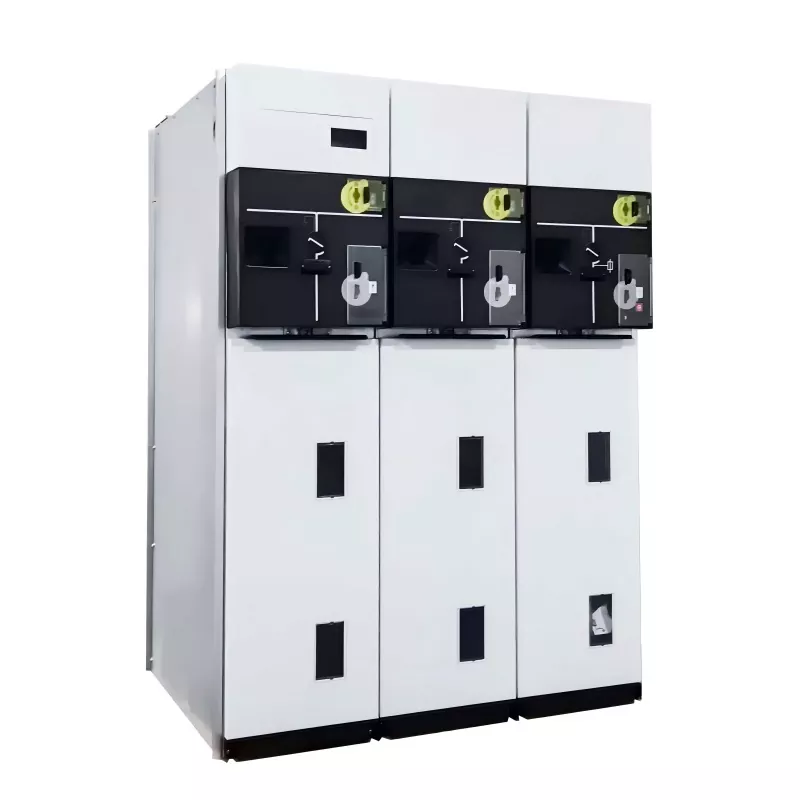
When I talk with project owners, EPC contractors, and utility buyers about medium-voltage distribution, I often notice the same concern: they do not simply want equipment that works on paper. They want equipment that fits limited installation space, reduces maintenance pressure, improves switching safety, and stays dependable for years in real operating conditions. That is exactly where Lugao Power Co.,Ltd gradually comes into the discussion. In many practical distribution projects, a well-designed Ring Main Unit is not just another cabinet in the system. It becomes a smart way to simplify operation, strengthen network continuity, and make future expansion easier without turning the site into a maintenance burden.
From my perspective, the value of a Ring Main Unit becomes especially clear when a buyer is balancing safety, footprint, reliability, and long-term cost. Instead of focusing only on initial purchase price, I prefer to look at how the equipment performs after installation, during daily switching, and across years of service. That is where a strong RMU solution starts to separate itself from an ordinary one.
What Problems Do Buyers Usually Face When Choosing Medium-Voltage Distribution Equipment?
I have seen many buyers run into the same set of problems before finalizing a procurement plan. Some sites have very limited room for installation. Some projects need a faster delivery cycle. Some operators are worried about maintenance complexity. Others care most about personnel safety, internal arc protection, or whether the system can be expanded later without major reconstruction.
- Space on site is often tight, especially in urban, commercial, and retrofit projects.
- Maintenance teams want sealed and practical equipment rather than structures that require frequent attention.
- Project managers need dependable switching and fault isolation to reduce service interruption.
- Investors want lower lifecycle cost, not just a lower quote at the beginning.
- Buyers increasingly prefer equipment that can be adapted to different power distribution layouts.
These are not abstract concerns. They directly affect downtime, labor cost, installation efficiency, and long-term project confidence. That is why I believe a carefully selected Ring Main Unit often solves more than one pain point at the same time.
How Can a Ring Main Unit Improve Distribution Reliability in Daily Operation?
In a real distribution network, reliability is not only about whether equipment can pass a factory test. It is about whether the network can keep running smoothly when load conditions change, when some sections need isolation, or when operators need a clear and safe switching process. A good Ring Main Unit helps by bringing multiple essential functions into one compact and coordinated structure.
I like RMU solutions because they make the distribution system more organized. Instead of using a scattered arrangement that is harder to manage and protect, the RMU approach supports a cleaner switching structure for medium-voltage networks. It helps operators isolate faults more efficiently, protect important feeders, and maintain power continuity for unaffected sections of the network.
For buyers, this matters because reliability is not only an engineering issue. It becomes a business issue when outages interrupt manufacturing lines, slow down commercial operations, or create safety risks in public facilities.
| Buyer Concern | Why It Matters | How an RMU Helps |
|---|---|---|
| Power continuity | Reduces disruption to operations and end users | Supports sectionalizing and organized switching within the network |
| Fault isolation | Limits the impact of localized electrical problems | Allows quicker control of affected sections |
| Operator safety | Protects personnel during switching and maintenance | Uses enclosed construction and safety-focused operating logic |
| System planning | Affects future upgrades and expansion cost | Offers modular and expandable possibilities for network growth |
Why Do Compact Design and Installation Flexibility Matter So Much?
Many buyers underestimate how much installation conditions shape the final equipment decision. I have seen technically sound products become impractical simply because they are too bulky, too complicated to arrange, or too inconvenient for the actual site environment. This is one reason the compact nature of a Ring Main Unit is so attractive.
In urban substations, commercial developments, industrial workshops, transport projects, and public utility upgrades, every square meter matters. A compact unit can help a project team save floor space, simplify cable routing, and reduce the pressure of fitting electrical infrastructure into already crowded locations.
Installation flexibility also matters when the project is moving fast. Buyers do not want equipment that creates delays because site coordination becomes too difficult. A practical RMU solution can support easier positioning, a cleaner layout, and smoother integration with the rest of the medium-voltage system.
- It suits sites where civil space is restricted.
- It can help streamline installation planning.
- It supports neater cable management and equipment arrangement.
- It is well suited to projects that value efficiency during deployment.
When I evaluate equipment from the buyer’s side, I do not separate design from project execution. If the structure helps the team install faster and plan smarter, that is already a real advantage.
What Makes Safety a Deciding Factor Instead of Just a Selling Point?
Every buyer says safety matters, but serious buyers look deeper. They do not stop at general claims. They ask how the structure supports safe operation, whether the switching process is clear, whether interlocking reduces operating mistakes, and whether the enclosure helps lower exposure to risk.
This is where a strong Ring Main Unit can become especially valuable. In medium-voltage environments, safe switching and controlled fault handling are critical. Buyers want confidence that the design supports operators rather than challenging them. They also want equipment that fits the real safety expectations of industrial plants, utility networks, transport infrastructure, commercial facilities, and public buildings.
I usually suggest looking at safety from four angles:
| Safety Angle | What Buyers Should Ask | Why It Affects Purchasing Decisions |
|---|---|---|
| Enclosure protection | Is the internal structure well protected from the outside environment? | Better enclosure design can improve operational confidence |
| Operating logic | Are switching positions clear and easy to verify? | Clear logic reduces the chance of human error |
| Interlocking | Does the equipment help prevent unsafe operation sequences? | Interlocks support safer field practice |
| Fault management | Can the unit support controlled fault isolation and protection coordination? | This affects network security and personnel protection |
For me, safety becomes convincing when it is built into the physical design and operating process, not when it appears only in a brochure sentence.
How Does Lower Maintenance Change the Real Cost of Ownership?
Many procurement decisions still focus too heavily on the purchase stage. I understand why. Budgets are visible, and price comparisons are easy. But I always remind buyers that electrical equipment continues to create cost after delivery. It affects inspection workload, spare parts planning, shutdown scheduling, service labor, and even the confidence of the people who operate it.
That is why maintenance-friendly design has real financial value. A sealed and well-structured Ring Main Unit can help reduce routine maintenance pressure compared with more exposed or more complex arrangements. Over time, that can contribute to lower labor demand, fewer service interruptions, and more predictable operating cost.
I find that this matters even more for buyers in the following situations:
- Projects in remote or difficult-to-access locations
- Sites with limited technical staff
- Facilities where downtime is expensive
- Public infrastructure projects that need stable long-term performance
- Export projects where after-sales efficiency matters greatly
In other words, a dependable Ring Main Unit is not only about electrical distribution. It is also about reducing the operational burden after commissioning.
Which Applications Benefit Most from This Kind of Solution?
In my view, the most suitable applications are the ones that need dependable medium-voltage distribution in a compact footprint and do not want unnecessary maintenance complexity. That covers a surprisingly wide range of industries and project types.
| Application | Common Need | Why RMU Fits Well |
|---|---|---|
| Industrial parks and factories | Stable distribution and operational continuity | Compact structure and organized switching support industrial use |
| Commercial buildings | Safe power supply in limited space | Helps manage space and distribution efficiency |
| Residential developments | Reliable service with low maintenance pressure | Supports practical long-term distribution planning |
| Hospitals and schools | Dependable and safe power infrastructure | Operational stability is especially important in public facilities |
| Transport and municipal projects | Durable equipment for infrastructure networks | Compact and adaptable design helps infrastructure deployment |
| Grid upgrades and export EPC projects | Flexible configuration and project compatibility | Modular planning supports varied system requirements |
I also think this is why buyers across different regions continue to pay close attention to the Ring Main Unit category. It answers a very practical question: how can I build a safer and more efficient medium-voltage distribution point without making the site harder to manage?
Why Should Buyers Look Beyond Specifications on a Data Sheet?
Specifications are necessary, but they are not the whole story. I always encourage buyers to ask what those specifications mean in the field. Does the cabinet design make access and arrangement more practical? Does the structure support safer operation? Can the configuration match the project instead of forcing the project to adapt to the equipment? Will the product still be a smart choice when the network expands later?
That is often where supplier understanding becomes just as important as the equipment itself. A product should not only meet electrical requirements. It should also reflect real project logic. This is one reason many buyers prefer working with manufacturers that understand switching applications, customization expectations, delivery coordination, and long-term support needs.
From that point of view, I believe the best RMU decision is the one that aligns technical performance with actual site demands, future planning, and lifecycle value.
What Should I Pay Attention to Before Sending an Inquiry?
Before I send an inquiry for a medium-voltage distribution project, I like to organize the information that will help the supplier recommend the right solution quickly and accurately. This saves time on both sides and usually leads to a more precise quotation.
- Project type and industry application
- Rated voltage and system requirements
- Incoming and outgoing feeder arrangement
- Whether expansion is expected in the future
- Installation environment and available site space
- Required standards, certifications, or export expectations
- Preferred configuration and quantity
- Delivery timeline and destination market
When this information is prepared in advance, choosing the right Ring Main Unit becomes much more efficient. It also helps the supplier suggest a more practical and project-focused configuration instead of giving a generic response.
Why Is Now a Good Time to Talk About the Right RMU Solution?
If you are planning a utility upgrade, factory distribution project, commercial installation, or export power infrastructure package, this is the right time to think carefully about the role of a dependable Ring Main Unit. The right choice can help you improve safety, use space more efficiently, reduce maintenance pressure, and build a distribution system that remains practical as your project evolves.
If you want a medium-voltage solution that is compact, reliable, and easier to adapt to real project conditions, it is worth discussing your requirements in detail with Lugao Power Co.,Ltd. Share your drawings, voltage level, configuration needs, and project goals, and let the team help you identify a suitable option. Contact us today to send your inquiry and get support for your next RMU project.