

What Standards Govern the Design of Armored Removable AC Metal Enclosed Switchgear
2026-03-03
In the world of medium-voltage power distribution, safety and reliability are non-negotiable. For engineers and facility managers evaluating Armored Removable AC Metal Enclosed Switchgear, understanding the regulatory framework behind the equipment is critical. At Lugao Power, we design our solutions to meet or exceed the strictest international benchmarks. This article explores the primary standards that dictate the engineering, manufacturing, and testing of this essential electrical infrastructure.
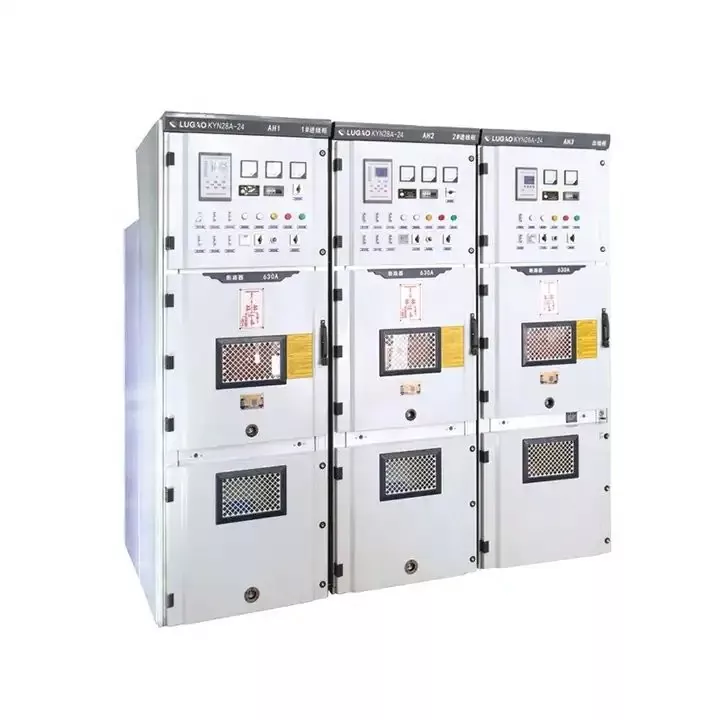
International Frameworks for Switchgear Design
The design of Armored Removable AC Metal Enclosed Switchgear is guided by a set of standards that ensure uniformity, safety, and performance. These standards define everything from dielectric ratings to the mechanical endurance of the removable assemblies.
The table below outlines the core standards that manufacturers like Lugao Power adhere to during the design and production process.
| Standard | Governing Body | Scope and Relevance to Switchgear |
|---|---|---|
| IEC 62271-200 | IEC | Specifies requirements for AC metal-enclosed switchgear and controlgear for rated voltages above 1 kV. It defines service conditions, construction (including compartment segregation), and test methods. This is the primary standard for Armored Removable AC Metal Enclosed Switchgear. |
| IEEE C37.20.2 | IEEE | Covers metal-clad and station-type cubicle switchgear in North America. It outlines the standards for drawout (removable) circuit breakers and the metal-enclosed construction. |
| IEC 62271-100 | IEC | Focuses specifically on alternating-current circuit-breakers. It ensures the removable circuit breaker element within the switchgear functions reliably under fault conditions. |
| ANSI C37.54 | ANSI | Applies to indoor alternating-current medium-voltage circuit breakers applied as removable elements in metal-enclosed switchgear, ensuring interchangeability and consistent test procedures. |
Key Design Requirements Derived from Standards
To comply with these regulations, the construction of Armored Removable AC Metal Enclosed Switchgear must pass rigorous testing. The following list highlights the critical design aspects mandated by these standards, which Lugao Power implements in every unit.
-
Internal Arc Classification (IAC): As per IEC 62271-200, switchgear must be tested to prove it can withstand internal arcing faults, protecting personnel standing nearby.
-
Compartment Segregation: Standards require physical barriers between major components like the bus bar, cable compartment, and the removable circuit breaker to contain faults and allow for safe, selective maintenance.
-
Dielectric Testing: High-voltage withstand tests (power frequency and lightning impulse) are mandatory to verify insulation levels.
-
Mechanical Endurance: The removable parts must undergo hundreds of operation cycles to ensure reliability over the equipment's lifespan.
Frequently Asked Questions
To further clarify the technical and operational aspects of this equipment, here are answers to common industry inquiries.
What is the difference between metal-clad and metal-enclosed switchgear regarding these standards?
The distinction lies in construction and compartmentalization. Standards like IEC 62271-200 define Metal-Clad as a subset of Metal-Enclosed switchgear. Metal-Clad gear, which includes most Armored Removable AC Metal Enclosed Switchgear, requires grounded metal barriers between major compartments (like the bus and the circuit breaker) and requires the removable element to be of the drawout type. Standard "metal-enclosed" designs may not have these specific barriers or mandatory drawout features, though our Lugao Power solutions typically follow the stricter metal-clad guidelines for maximum safety.
How do design standards affect the maintenance of the removable circuit breaker?
Standards ensure that the removable aspect of Armored Removable AC Metal Enclosed Switchgear is designed for safe and straightforward isolation. Because the design is governed by IEC or IEEE, the circuit breaker can be physically racked out to a disconnect position, creating a visible air gap. This allows maintenance personnel to service the breaker safely without de-energizing the entire bus. Lugao Power designs its switchgear to ensure that the interlocking systems required by these standards prevent operator error during this removal process.
Are there specific environmental standards that impact the enclosure design?
Yes, while the primary safety standards are IEC 62271 or IEEE C37, the enclosure design is heavily influenced by the Ingress Protection (IP) Code (IEC 60529). This standard dictates the enclosure's resistance to dust and water. For example, indoor Armored Removable AC Metal Enclosed Switchgear might have an IP4X rating, while outdoor or harsh environment units may require IP54. Lugao Power customizes the enclosure rating based on these environmental standards to ensure long-term durability.
Conclusion
Adherence to IEC, IEEE, and ANSI standards is not merely a checkbox; it is the foundation of safety and performance for Armored Removable AC Metal Enclosed Switchgear. By ensuring compliance, manufacturers provide assurance that the equipment can handle fault conditions, protect personnel, and provide reliable service for decades.
When your project demands switchgear that meets these rigorous international benchmarks, partnering with an experienced manufacturer is essential.
Contact Lugao Power today to discuss your specifications and let our engineering team provide a compliant, customized solution for your grid.