

What Standards and Regulations Govern the Manufacturing of European Type Substations
2026-01-13
When procuring a European Type Substation, understanding the governing standards and regulations is crucial for ensuring safety, reliability, and global market acceptance. These substations, known for their compact, metal-enclosed, and factory-assembled design, are not manufactured arbitrarily. They adhere to a stringent framework of international and regional norms. At Lugao, we consider compliance not as a hurdle, but as the foundational blueprint for engineering excellence in every European Type Substation we deliver.
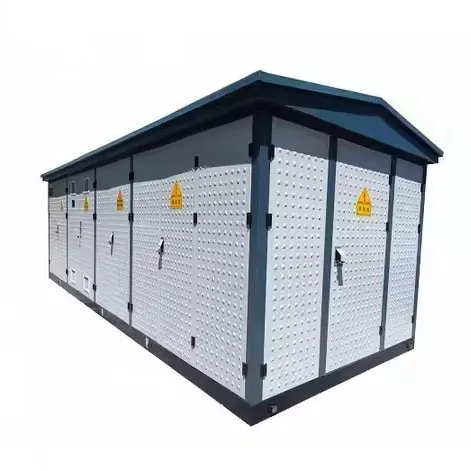
The regulatory landscape is built on several key pillars:
-
IEC Standards: The International Electrotechnical Commission provides the core technical standards.
-
IEC 62271-202: Specifically addresses high-voltage/low-voltage prefabricated substations.
-
IEC 61936-1: Covers power installations exceeding 1 kV AC.
-
IEC 61439: Series for low-voltage switchgear and controlgear assemblies.
-
-
Regional Directives (EU): For the European market, compliance with EU directives is mandatory.
-
Low Voltage Directive (2014/35/EU): Ensures electrical safety.
-
Electromagnetic Compatibility Directive (2014/30/EU): Limits electromagnetic emissions.
-
RoHS Directive (2011/65/EU): Restricts hazardous substances.
-
A Lugao European Type Substation integrates these requirements seamlessly. The table below summarizes how key standards map to critical substation characteristics:
| Standard/Directive | Primary Governance Area | Key Impact on Substation Design |
|---|---|---|
| IEC 62271-202 | Design & Testing of Prefabricated Units | Defines requirements for insulation, protection degrees (IP), mechanical operations, and type tests. |
| IEC 61936-1 | Safety & Installation | Mandates clearances, earthing, and protection against electric shock and thermal hazards. |
| EMC Directive | Electromagnetic Compatibility | Ensures the substation does not disturb other equipment and is immune to interference. |
European Type Substation FAQ
What is the main advantage of a European Type Substation being "type-tested"?
Type-testing according to standards like IEC 62271-202 means the complete substation assembly has undergone rigorous verification in a laboratory. This proves its operational and safety performance under defined conditions, offering higher reliability compared to site-assembled systems where only individual components are certified.
Are European Type Substations suitable for harsh environments?
Yes, a properly engineered European Type Substation is designed for specific environmental conditions. Standards dictate the required Ingress Protection (IP) code for enclosures. For instance, a Lugao substation for coastal areas would feature a higher IP rating and corrosion-resistant materials to protect against salt mist and humidity.
How does compliance with EU directives facilitate market access?
Conformity with the LV, EMC, and RoHS directives allows the manufacturer to affix the CE marking. This marking is a passport for free trade within the European Economic Area, signaling to authorities and clients that the product meets all essential health, safety, and environmental requirements.
Navigating this complex web of standards requires a partner with deep expertise. Lugao’s commitment to rigorous design and manufacturing ensures every European Type Substation we produce is not just a product, but a certified asset for your power distribution network. To discuss how a fully compliant Lugao substation can meet your project’s specific needs, contact us today for a detailed consultation.