

What Safety Standards Apply to Three Phase Isolation Transformer Installation
2026-02-26
Installing a Three phase isolation transformer is a critical task that directly impacts the safety and reliability of an industrial power distribution system. Compliance with established safety standards is not merely a regulatory requirement; it is a fundamental practice to protect personnel and equipment from electrical hazards. At Wenma, we ensure that every unit we supply is designed for compliance, but correct field installation is equally vital. Understanding the specific codes governing these installations helps prevent costly downtime and dangerous fault conditions.
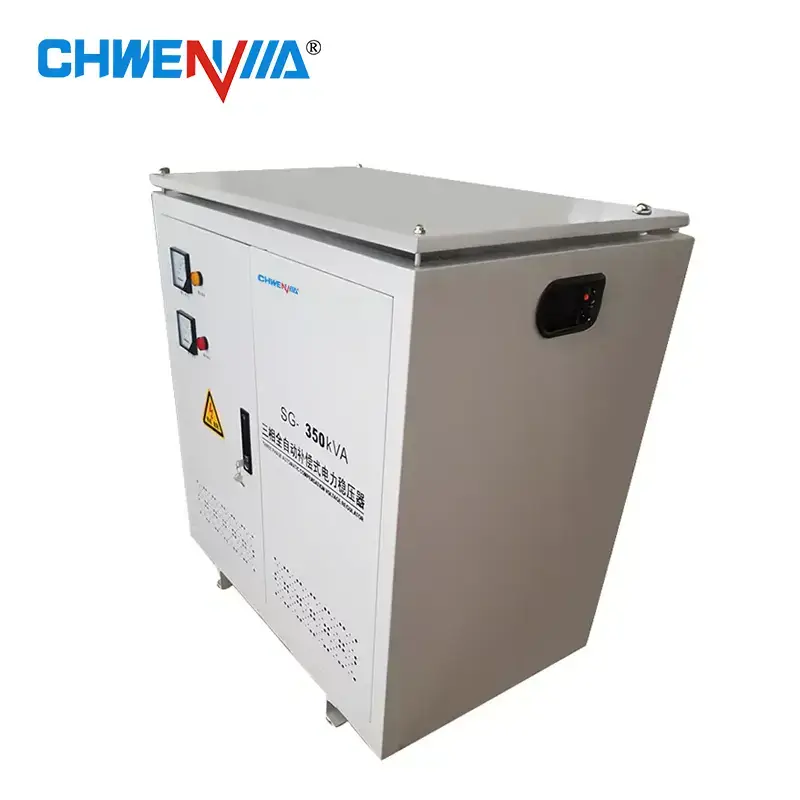
Core International and Regional Standards
The primary standards for Three phase isolation transformer installation focus on overcurrent protection, grounding, clearance distances, and thermal management. These regulations vary slightly by region but share common principles derived from the International Electrotechnical Commission (IEC) and the Institute of Electrical and Electronics Engineers (IEEE).
The table below outlines the most relevant standards and their typical application:
| Standard Designation | Region / Issuing Body | Scope of Application for Installation |
|---|---|---|
| IEC 60076 | International (IEC) | Power transformer specifications; includes temperature rise and dielectric tests relevant to installation planning. |
| NEC Article 450 | United States (NFPA) | Specifics on transformer location, overcurrent protection, and disconnecting means. |
| IEEE C57.12.00 | International (IEEE) | General requirements for liquid-immersed and dry-type distribution and power transformers. |
| NFPA 70E | United States (NFPA) | Standard for Electrical Safety in the Workplace; governs safe work practices during installation. |
| CSA C22.1 | Canada (CSA) | Canadian Electrical Code; Part I outlines similar safety protocols to NEC for transformer installations. |
Adhering to these codes ensures that the Three phase isolation transformer is integrated into the grid in a manner that isolates faults and contains any potential arc-flash events.
Key Installation Safety Requirements
When positioning and connecting a Three phase isolation transformer, several physical and electrical rules must be followed. Proper installation ensures the longevity of the unit and the safety of nearby operators.
Working Space and Ventilation
Enclosures containing a Three phase isolation transformer must have adequate clearance. The NEC specifies minimum working space depths based on voltage exposure. For example, equipment operating at 600V typically requires at least 3 feet of clear space in front of the enclosure. Ventilation is also critical; transformers generate heat due to core losses, and restricted airflow can lead to insulation failure.
Grounding and Bonding
Proper grounding is the most critical safety element. The secondary neutral of a Three phase isolation transformer must be solidly grounded to create a low-impedance path for fault currents. This ensures that overcurrent protection devices will trip quickly during a ground fault. Additionally, the transformer enclosure and any metallic conduits must be bonded to the system ground to prevent touch-potential hazards.
Selection Criteria for Safe Installation
Choosing the correct unit for the environment prevents future safety risks. The table below highlights common environmental classifications and their required features:
| Installation Environment | Required Feature for Safety | Reason |
|---|---|---|
| Dusty or Humid Areas | NEMA 3R or 4X Enclosure | Prevents conductive dust or moisture from bridging terminals and causing shorts. |
| Hazardous Locations | Explosion-Proof / XP Rating | Contains any internal arc or spark, preventing ignition of surrounding gases. |
| High Seismic Zones | Vibration Isolators / Flexible Conduit | Prevents rigid connections from breaking during seismic activity. |
| Roof/Outdoor Installation | Weather Shield & Drip Shields | Protects the Three phase isolation transformer core and windings from water ingress. |
FAQ: Three Phase Isolation Transformer
To further clarify the practicalities of working with these devices, here are answers to common technical questions regarding Three phase isolation transformer units.
Q: What is the difference between "isolating" and "shielded" in a Three phase isolation transformer?
A: An isolating Three phase isolation transformer simply has separate primary and secondary windings to break the electrical path. A shielded version, however, includes an electrostatic shield (a copper or aluminum foil) placed between the windings. This shield is grounded, providing an additional layer of protection by shunting high-frequency electrical noise and common-mode transients directly to ground, which is essential for sensitive electronic loads.
Q: Can a Three phase isolation transformer be used to create a separately derived system?
A: Yes, absolutely. When you install a Three phase isolation transformer and ground one of its secondary conductors (typically the neutral), you create a "separately derived system." This is a key concept in the NEC. It allows you to establish a new, local ground reference point, which can help reduce neutral currents and provide a cleaner power source for specific equipment, separate from the main utility supply.
Q: How often should a Three phase isolation transformer undergo safety inspection?
A: For industrial installations, a Three phase isolation transformer should undergo a thermographic inspection annually while under load. This involves using an infrared camera to check for hot spots at terminal connections and on the core. Additionally, insulation resistance testing (megger testing) should be performed every 1-3 years to verify that the winding insulation has not degraded, which is a primary safety risk for short circuits.
Conclusion
Ensuring that your Three phase isolation transformer installation meets the latest safety codes protects both your investment and your team. From proper grounding to selecting the correct enclosure type, every detail matters. At Wenma, we provide comprehensive technical support to help you navigate these requirements.
Contact Us today to discuss your project specifications and ensure a safe, compliant installation of your power equipment.