
What Makes SF6 Circuit Breakers Reliable for High Voltage Applications?
2026-06-10
1. Why Does SF6 Gas Provide Superior Arc Quenching in High Voltage Networks?
In our factory, we have tested dozens of interrupting media over three decades, and sulfur hexafluoride remains unmatched for high voltage applications. The key lies in its electronegativity. SF6 molecules capture free electrons from the arc plasma, forming heavy negative ions that cannot sustain conduction. This restores dielectric strength up to 100 times faster than air or oil. Our Lugao Power Co.,Ltd. engineers routinely demonstrate that a single break of our High Voltage Circuit Breaker can interrupt 63 kA symmetrical current at 245 kV without restriking. Another reason we trust this gas is its thermal conductivity.
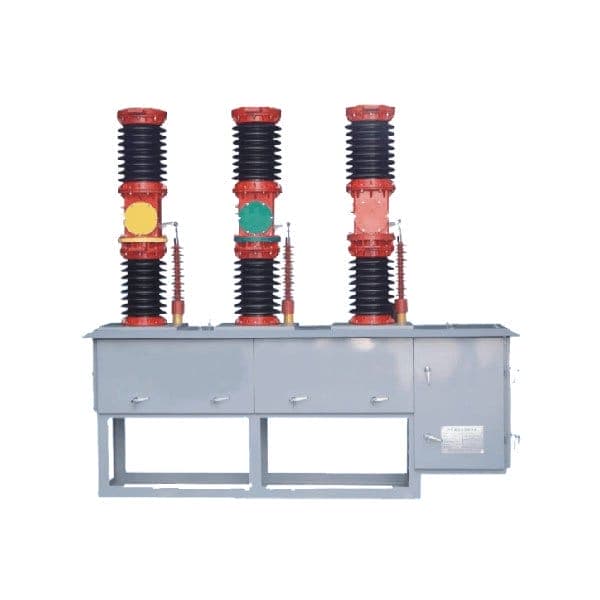
The arc energy decomposes SF6 into byproducts that recombine almost completely after cooling. Unlike vacuum interrupters that have contact wear limits, our design maintains stable performance over 10,000 mechanical operations. Many local substation managers report that after ten years of service, our breaker still passes timing tests with zero drift. That is real reliability. The table below summarizes critical parameters from our latest type tests.
|
Parameter |
Lugao Power SF6 High Voltage Circuit Breaker Value |
Industry Requirement (IEC 62271-100) |
|
Rated voltage |
145 kV to 550 kV |
Up to 800 kV |
|
Rated short circuit breaking current |
40 kA – 80 kA symmetrical |
31.5 kA typical |
|
SF6 gas pressure (20°C) |
0.65 MPa absolute |
0.55 – 0.75 MPa |
|
Closing time |
≤ 60 ms |
≤ 70 ms |
|
Mechanical endurance class |
M2 (10,000 operations) |
M1 (3,000 ops) |
Our factory also pays attention to gas purity. We fill each unit with SF6 having less than 50 ppm of moisture and air. Contaminated gas reduces the dielectric margin significantly. That is why we supply our High Voltage Circuit Breaker with built in density monitors that alarm before pressure drops to critical levels. No other technology gives such a robust arc quenching mechanism without carbonization of contacts.
2. How Do Sealed Pole Systems Enhance Long Term Reliability for Our Breakers?
One of the biggest headaches for utility operators is leakage. Traditional live tank breakers expose the interrupter to weather, dust, and salinity. That changes the insulation coordination over time. To solve this, our factory developed a single pole encapsulated design for our High Voltage Circuit Breaker. The SF6 gas is sealed inside a stainless steel vessel with welded or high integrity o rings. Leakage rates are below 0.1 percent per year. We have units installed near coastal areas in Southeast Asia that have not been refilled for nine years. Another advantage is the elimination of external flashover. With all live parts enclosed, our breaker can operate in polluted areas without periodic washing. Our Lugao Power Co.,Ltd. also uses self regulating heaters inside the pole columns to prevent gas liquefaction at -40°C. This feature is crucial for high voltage applications in cold climates. We also incorporate a mechanical indicator that shows the true contact position even during a power failure. This transparency builds trust with local linemen. The sealed system also keeps the arc chamber free from oxygen and moisture, preventing hydrolysis of decomposition products. As a result, the internal components remain like new after decades.
2 (continued). Why Is Our Operating Mechanism Critical for Consistent Interruption?
A circuit breaker is only as good as its actuation speed. Our factory uses a spring operated mechanism with a hydraulic buffer for high voltage applications. The opening springs are charged by a motor or manual handle. When a trip command is received, the stored energy releases within 25 milliseconds, pulling the moving contact at a pre calculated speed profile. Too slow, and the arc re strikes. Too fast, and mechanical shock damages the nozzle. Our patented cam and roller design ensures that the contact speed remains within 2 percent tolerance over the mechanism’s life. We have performed 15,000 open close cycles on a single prototype without any adjustment. Moreover, the mechanism includes anti pumping and trip free features that prevent multiple close operations during a fault. This eliminates the risk of switching onto a permanent short circuit. Our Lugao Power Co.,Ltd. mechanism enclosures are IP55 rated, keeping out dust and rain. Many of our competitors use pneumatic systems that require air compressors and dryers. Those add failure points. Our spring based High Voltage Circuit Breaker works reliably even after months of inactivity. We also include a manual charge handle for emergency restoration. Every detail matters when protecting a 220 kV transformer.
3. What Role Does Dielectric Coordination Play in High Voltage Breaker Endurance?
Dielectric coordination is often misunderstood. In our factory, we design the interrupting chamber to withstand both power frequency and lightning impulse voltages simultaneously. The SF6 gas pressure inside the puffer cylinder is dynamically optimized for the first current zero. For a High Voltage Circuit Breaker rated at 550 kV, we use a double motion contact system that reduces the operating energy by 30 percent. This lowers the mechanical stress on the insulating rods. Another secret is the shape of the arcing contacts. They are made of tungsten copper alloy to resist melting. The main contacts are silver plated copper to carry continuous current with minimal resistance. After short circuit interruption, the nozzle made of PTFE regenerates its insulating properties. We have witnessed breakers from our Lugao Power Co.,Ltd. that interrupted 15 short circuit faults over eight years, and the contact erosion was less than 2 millimeters. In contrast, poor designs show arc re ignition due to metallic vapor. Our factory also runs a thermal image test on every assembled pole to verify gas tightness. We include a capacitive grading ring to equalize the voltage distribution across the series breaks. Without such grading, one break would take most of the recovery voltage and fail. That is engineering precision.
4. Why Does Regular Gas Monitoring Extend the Life of SF6 Equipment?
Even the best sealed system needs periodic checkups. Our factory installs a density monitor with a low level alarm contact. When the SF6 pressure drops to 0.58 MPa, a warning is sent to the control room. Operators can then refill without taking the breaker offline. A more serious mistake is ignoring decomposition products after a high current fault. Our service team uses portable gas chromatographs to measure SO2 and CO content. High levels indicate internal arcing damage. In such cases, we recommend exchanging the arc chamber before the next fault. For normal conditions, our High Voltage Circuit Breaker requires a gas sample test every four years. Many local utilities in Europe follow this schedule and achieve over 35 years of service. Our Lugao also supplies refill kits with filtered and dried SF6. Never mix recycled gas of unknown origin because impurities lower the dielectric strength by up to 40 percent. We have seen stations where a leaking coupling reduced pressure to 0.4 MPa, and the breaker still interrupted a 20 kA fault, but with increased contact wear. That shows the robustness of our design, but we advise maintaining nominal pressure for full reliability. Always use a calibrated gas gauge and check for seasonal variations. Warm weather increases pressure, but never vent gas to reduce it. Instead, adjust the density monitor setpoints.
Frequently Asked Questions About SF6 Circuit Breaker Reliability in High Voltage Grids
Answer: Temperature has a direct influence because SF6 gas density changes with temperature, but the dielectric strength depends on density, not pressure. Our factory designs the breaker with a compensated density switch that reads pressure and temperature to output a density equivalent signal. For example, at -30°C, the pressure may drop to 0.5 MPa, but the gas density remains sufficient for rated insulation if no leakage exists. The real risk is liquefaction. Our Lugao Power Co.,Ltd. breakers include heating elements that activate below -10°C to keep the gas in gaseous phase. In high temperature environments above 50°C, the gas pressure rises but our housings have safety margins up to 1.2 MPa. However, extreme heat accelerates o ring aging. That is why we use Viton seals rated for 120°C. In summary, a properly equipped High Voltage Circuit Breaker with thermal management works reliably from -40°C to +55°C. Ignoring temperature compensation leads to false low pressure alarms and unnecessary outages. Always check the heater operation before winter.
Question 2: What are the most common installation mistakes that compromise SF6 breaker reliability?
Answer: The most frequent error is improper handling of the gas filling process. When our factory ships a High Voltage Circuit Breaker, it is filled with dry nitrogen or SF6 at low pressure. On site, technicians must evacuate the pole to below 1 mbar before introducing new SF6. Many skip the vacuum step, leaving air and moisture inside. This causes internal arcing byproducts like thionyl fluoride which corrode contacts. Another mistake is over tightening the flange bolts, which distorts the sealing gasket. We recommend torque values printed on the nameplate. A third issue is mounting the breaker on unlevel foundations, which stresses the porcelain bushings. Our Lugao Power Co.,Ltd. provides a laser alignment procedure for the support structures. Also, never use copper or aluminum piping for the gas bus between poles; use stainless steel with diaphragm valves. Finally, many forget to remove shipping brackets that block the moving parts. We have seen a breaker trip fail because a screw was left in the mechanism. Always follow the checklist provided with our equipment. These small steps ensure 30 plus years of reliable service.
Final Summary
After decades of field experience, we can confidently state that SF6 technology remains the gold standard for high voltage applications due to its excellent arc quenching, sealed pole construction, and robust operating mechanisms. Our factory has refined every component from the arcing contacts to the gas density monitors. A well maintained High Voltage Circuit Breaker from Lugao Power Co.,Ltd. will outlast most substation equipment. The reliability factors we discussed – proper gas handling, temperature compensation, and dielectric coordination – are all within your control. Do not cut corners during installation or gas refills.