

When I look at medium voltage distribution projects, I rarely judge a cabinet only by its nameplate rating. I care about how safely it isolates faults, how easily it fits into a crowded site, how much maintenance it demands after installation, and whether the supplier can support real project conditions rather than only standard catalog drawings. That is why I see Lugao Power Co., Ltd. as a practical option for buyers comparing a Ring Main Unit for industrial parks, commercial buildings, residential communities, utility upgrades, and infrastructure projects.
A ring network sounds simple on paper, but anyone who has worked with power distribution knows the real pressure comes later. Space is limited, downtime is expensive, safety risks cannot be treated casually, and every project has its own cable direction, protection logic, transformer capacity, and operating environment. A good RMU should not make the site team fight the equipment. It should make the distribution system easier to control, easier to expand, and easier to protect.
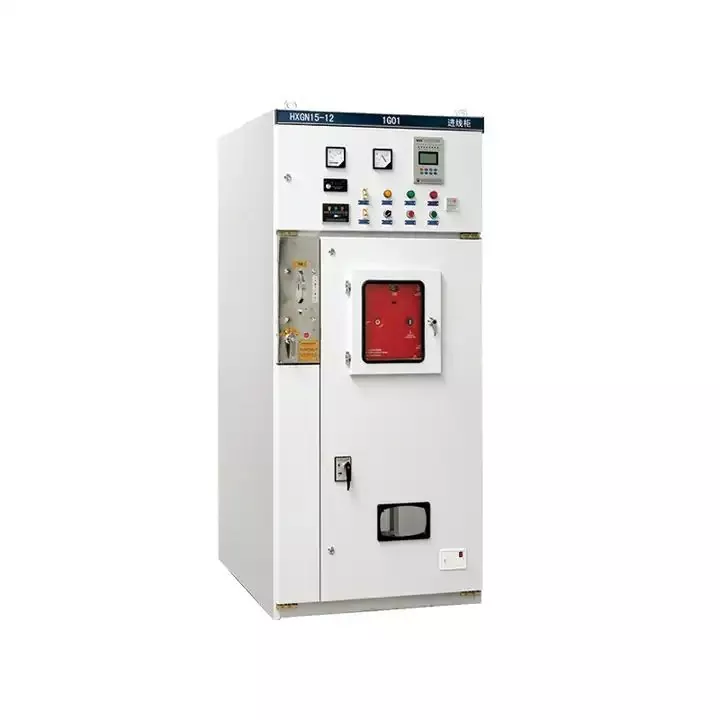
What Problems Do I Usually See Before Choosing a Ring Main Unit?
The most common problem is not always the lack of equipment. It is the mismatch between the equipment and the project. I have seen buyers focus only on price, only to discover later that the cabinet layout does not match the cable trench, the operating mechanism is awkward, the protection configuration is not suitable, or the unit needs more maintenance than expected.
For medium voltage distribution, these mistakes can become expensive very quickly. A compact and well-designed Ring Main Unit helps reduce those risks because it integrates switching, protection, cable connection, isolation, and grounding functions into a more controlled structure.
- I want equipment that supports safe operation during switching and maintenance.
- I want a compact layout when the electrical room or outdoor station has limited space.
- I want sealed insulation or reliable vacuum switching technology to reduce environmental impact.
- I want clear position indication and interlocking to reduce human error.
- I want a supplier that can adjust configurations based on project drawings and load requirements.
Why Is a Ring Main Unit Often Used in Modern Distribution Networks?
I prefer using an RMU in many distribution projects because it is built for practical network operation. In a ring distribution system, power can often be supplied from more than one direction. When one section needs maintenance or a fault occurs, operators can isolate the affected part and keep the rest of the system running with better continuity.
This is especially valuable in places where power interruption creates direct losses, such as factories, data-related facilities, transport systems, hospitals, shopping centers, and urban substations. A Ring Main Unit is not just a cabinet. It is a compact control point for medium voltage power flow.
| Project Concern | How an RMU Helps | Buyer Benefit |
|---|---|---|
| Limited installation space | Uses a compact cabinet structure with integrated functional units | Fits more easily into urban substations, building basements, and small electrical rooms |
| Need for safe operation | Uses mechanical interlocking, grounding switch, position indication, and protected compartments | Reduces incorrect operation and improves site safety |
| Unstable outdoor or industrial environments | Can use sealed insulation, SF6 insulation, or vacuum switching design depending on project needs | Improves reliability under dust, humidity, and demanding operating conditions |
| Future network expansion | Supports flexible cabinet combinations and expandable configurations | Makes future load growth easier to manage |
| Maintenance pressure | Reduces exposure of key high-voltage components | Lowers routine maintenance workload and supports stable long-term operation |
Which Features Should I Check Before Buying a Ring Main Unit?
I never suggest choosing an RMU only by voltage level. A buyer should look at the entire working condition. The cabinet must match the incoming and outgoing cable plan, transformer protection method, load break requirements, short-circuit protection needs, installation environment, and local operation habits.
When I evaluate a Ring Main Unit, I usually pay attention to these details first:
-
Insulation method
SF6 gas insulation, solid insulation, air insulation, and vacuum-based designs each have their own advantages. The right option depends on safety preference, environmental conditions, standards, and maintenance strategy. -
Switching and protection configuration
Some projects need load break switches. Some need fuse protection for transformers. Some need vacuum circuit breakers for stronger fault interruption requirements. -
Cabinet structure
A stable cabinet body, corrosion-resistant material, pressure relief design, and separated compartments all matter for long-term reliability. -
Operating mechanism
The mechanism should feel clear, safe, and repeatable. Ambiguous operation is a hidden risk in power distribution. -
Project customization
Cable direction, dimensions, CT/PT options, metering units, protection relays, and communication interfaces may need adjustment before production.
How Does Lugao Power Co., Ltd. Support Practical RMU Projects?
What I value about Lugao Power Co., Ltd. is that the company does not treat the RMU as a one-size-fits-all product. For export buyers, EPC contractors, distributors, and project owners, customization is often the difference between smooth installation and painful site modification.
Lugao Power Co., Ltd. can provide RMU solutions for different power distribution scenarios, including SF6-insulated units, vacuum switch configurations, fixed-type cabinets, expandable designs, and project-specific layouts. This matters because a Ring Main Unit may be installed in very different environments, from a factory substation to a residential power room or a municipal distribution network.
- Configuration support for different incoming and outgoing feeder schemes
- Optional protection arrangements for transformers and distribution lines
- Compact cabinet design for space-sensitive sites
- Reliable operating mechanism with clear indication and interlocking
- Support for OEM requirements and export project documentation
- Application coverage for industrial, commercial, residential, utility, and infrastructure projects
Is a Ring Main Unit Suitable for Industrial and Commercial Projects?
Yes, and I would say it is often one of the more practical choices. Industrial and commercial users usually care about continuity, safety, and space. They also need equipment that can be operated by maintenance teams without unnecessary complexity.
In factories, an RMU can help distribute power to transformers, production lines, and auxiliary systems. In shopping malls or office buildings, it can help manage medium voltage incoming power and transformer protection while keeping the electrical room more compact. In residential communities, it supports stable power distribution with a cleaner and more organized cabinet layout.
| Application Area | Typical Requirement | Recommended RMU Value |
|---|---|---|
| Industrial parks | Reliable distribution for multiple workshops or production zones | Flexible feeder arrangement and strong protection capability |
| Commercial buildings | Compact electrical room and safe daily operation | Space-saving design and clear operating interface |
| Residential communities | Stable transformer power supply with low maintenance pressure | Sealed structure and practical transformer protection |
| Railway and municipal projects | Reliable power distribution in infrastructure networks | Durable cabinet structure and expandable system design |
| Utility distribution | Network switching, isolation, and load management | Ring network operation and fault isolation support |
What Makes a Ring Main Unit Safer for Operators?
Safety is where I refuse to compromise. A medium voltage cabinet should never depend only on operator experience. The equipment itself should guide correct operation and prevent dangerous mistakes as much as possible.
A well-designed Ring Main Unit improves operator safety through interlocking mechanisms, grounding functions, visible position indication, live display options, separated functional compartments, and pressure relief design. These details may not look dramatic in a catalog, but they matter a lot when the site team is switching feeders, grounding cables, or preparing for maintenance.
- Interlocking helps prevent incorrect switching sequence.
- Grounding switch improves safety during maintenance work.
- Position indicators make the switch status easier to confirm.
- Separated compartments reduce the spread of internal faults.
- Pressure relief design helps manage fault energy more safely.
- Sealed high-voltage components reduce exposure to dust and moisture.
Which Buyers Benefit Most from Working with an RMU Manufacturer Instead of a General Trader?
I usually recommend working directly with a capable manufacturer when the project has technical requirements beyond a simple standard order. A general trader may be able to quote quickly, but a manufacturer is more likely to help with drawings, configuration details, testing requirements, and production adjustments.
This is important for buyers who need more than a cabinet. They need a distribution solution that matches actual project conditions. For example, an EPC contractor may need technical documents for approval. A distributor may need stable product quality and repeatable delivery. A utility project may need a clear protection scheme. An industrial user may need a compact unit that fits an existing substation room.
In these cases, choosing Lugao Power Co., Ltd. as a Ring Main Unit manufacturer can make communication more efficient because the technical discussion stays closer to production reality.
How Do I Compare RMU Options Without Getting Lost in Technical Details?
The easiest way is to start from the project rather than the product. Before I compare RMU models, I would first collect the basic project information. This prevents the quotation from becoming vague and helps the manufacturer recommend a suitable configuration.
| Information I Would Prepare | Why It Matters |
|---|---|
| Rated voltage and frequency | Confirms the basic electrical level of the system |
| Number of incoming and outgoing feeders | Determines the cabinet combination and layout |
| Transformer capacity | Helps select protection method and fuse or breaker configuration |
| Installation location | Influences cabinet type, enclosure requirement, and environmental protection |
| Cable entry direction | Affects installation convenience and site compatibility |
| Local standard or project specification | Ensures the final design meets approval and inspection needs |
| Need for metering, relay, or communication | Clarifies whether extra functional units are required |
Once this information is clear, the selection process becomes much easier. Instead of asking only for “the best price,” I can ask for the right technical scheme, suitable accessories, and realistic delivery plan.
Do I Need Customization for a Ring Main Unit?
In many projects, yes. Standard models are useful, but real sites are rarely identical. Cable direction, cabinet width, feeder quantity, transformer protection, busbar arrangement, relay brand, metering requirement, and enclosure style may all need adjustment.
I would consider customization especially when the project involves export markets, existing substation upgrades, unusual room dimensions, strict utility approval, or combined equipment packages. A customized Ring Main Unit can reduce installation trouble and make the final power distribution system more aligned with actual use.
- Choose expandable or fixed configuration based on future network plans.
- Select load break switch, fuse combination, or vacuum circuit breaker based on protection needs.
- Adjust cabinet layout according to cable entry and installation space.
- Add metering, live indication, surge protection, or relay protection when required.
- Confirm documentation, drawings, and nameplate details before production.
What Should I Ask Before Sending an Inquiry?
A clear inquiry helps both sides move faster. I would not send only a product name and wait for a general price. Instead, I would share the system requirement and ask for a matching solution. This saves time and usually leads to a more accurate quotation.
Here are the questions I would ask:
- Which RMU configuration is suitable for my incoming and outgoing feeder plan?
- Should I use fuse protection or a vacuum circuit breaker for transformer protection?
- Can the cabinet be customized according to my electrical room dimensions?
- What drawings and technical documents can be provided for project approval?
- Can the unit support future expansion if the load increases?
- What testing and quality control procedures are included before shipment?
- Can the manufacturer support OEM requirements for my local market?
Why Would I Recommend Lugao Power Co., Ltd. for RMU Buyers?
I would recommend Lugao Power Co., Ltd. to buyers who want a practical balance between product reliability, customization support, and export project experience. The company’s RMU solutions are designed for medium voltage distribution projects where safety, compact structure, flexible configuration, and stable operation are all important.
For me, the real advantage is not only that the company can supply a Ring Main Unit. It is that the product can be matched with different use cases, including industrial distribution, commercial power rooms, residential substations, infrastructure systems, and utility network upgrades. That makes it easier for buyers to communicate project needs and receive a solution that fits the site rather than forcing the site to fit the equipment.
If you are planning a medium voltage distribution project and need a safer, compact, and configurable Ring Main Unit, I would suggest sending your project drawings, feeder requirements, voltage level, and installation conditions to Lugao Power Co., Ltd. The team can help review the details and recommend a suitable solution. For quotation, technical support, or customized RMU selection, please leave your inquiry now or contact us to discuss your project requirements.