

What Makes 33kV Oil Immersed Transformer Ideal for Wind Farm Collection Systems?
2026-09-09
1. What Are the Key Electrical Requirements for a Wind Farm Collection System?
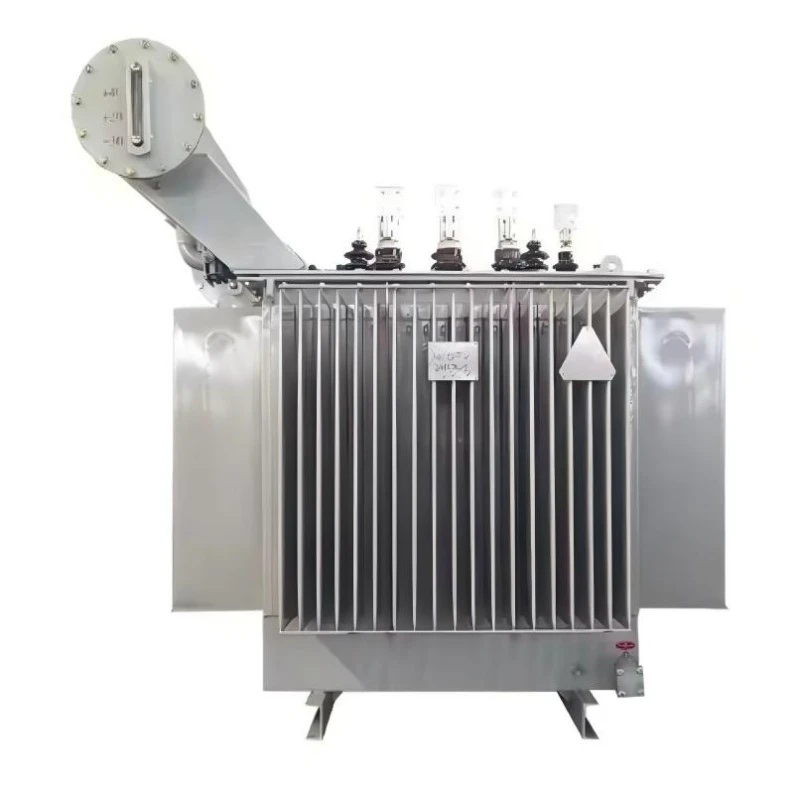
The collection system of a wind farm is responsible for gathering power from multiple turbine strings and stepping it up to a voltage suitable for transmission to the grid. The transformer at each collection point must handle the aggregate output of several wind turbines, typically ranging from 10 to 30 MW per collection feeder. The 33kV voltage level has become a standard choice for onshore wind farms because it offers a practical balance between power transfer capability and the insulation costs of the collection network. The Oil Immersed Transformer serving this application must be rated for continuous operation at the collection voltage, with a capacity that matches the total output of the connected turbines. In our factory, we design Oil Immersed Transformer units with ratings from 5 MVA to 40 MVA for 33kV collection systems.
Typical wind farm collection system configuration: Each collection feeder connects 3 to 8 wind turbines. The aggregate power is delivered to a 33kV Oil Immersed Transformer located near the turbine string. From there, the 33kV feeders run to the main substation where the voltage is stepped up to 110kV or 220kV for transmission.
2. Why Does the 33kV Voltage Level Work for Wind Farm Collection Networks?
The choice of 33kV for wind farm collection systems is based on the balance between technical and economic factors. A higher voltage would reduce losses in the collection network but would require more expensive switchgear and cable insulation. A lower voltage would reduce insulation costs but would increase line losses and require larger conductor sizes. For onshore wind farms with collection distances of 5 to 15 km, the 33kV level is a proven optimum. The Oil Immersed Transformer at the collection point steps the turbine generator voltage (typically 690V or 3.3kV) up to 33kV. The 33kV feeders then connect the collection transformer to the main substation. The table below shows the relative performance of the Oil Immersed Transformer at different voltage levels in a wind farm application.
| Parameter | 33kV collection | 66kV collection | 11kV collection |
| Typical feeder length | 5 – 15 km | 10 – 30 km | 3 – 8 km |
| Line losses at rated power | Base (1.0x) | 0.25x (lower) | 3.0x (higher) |
| Switchgear cost | Base (1.0x) | 1.5 – 2.0x | 0.7 – 0.8x |
| Cable insulation cost | Base (1.0x) | 1.3 – 1.6x | 0.6 – 0.7x |
| Overall lifecycle cost | Optimal | Suitable for long distances | Suitable for small farms |
At Lugao, we manufacture Oil Immersed Transformer units that are optimized for 33kV collection systems. The design includes on-load tap changers to handle voltage fluctuations from the turbine strings, ensuring that the 33kV bus voltage remains within the required tolerance.
3. What Operational Demands Does a Wind Farm Place on an Oil Immersed Transformer?
The operating profile of a wind farm transformer differs significantly from a conventional distribution transformer. The load varies continuously with the wind speed, and the transformer may experience rapid load changes when the wind is gusting. The transformer must also handle the high inrush currents from the turbines when they re-energize after a grid outage. In a typical wind farm, the Oil Immersed Transformer may see load factors ranging from 10 percent to 110 percent of its rated capacity within a single day. This cyclic loading causes thermal cycling that can stress the insulation and the winding connections. The transformer design must account for these dynamic loads. The table below shows the load characteristics of a 33kV Oil Immersed Transformer in a typical wind farm application.
| Load characteristic | Value | Design implication for Oil Immersed Transformer |
| Daily load factor range | 10 – 110% | Winding design must withstand thermal cycling |
| Load change rate (max) | 20% per minute | Tap changer must respond rapidly |
| Inrush current (at energization) | 8 – 12x rated current | Core design must avoid saturation |
| Annual overload hours | 50 – 200 hours | Oil cooling system must have adequate margin |
| Ambient temperature range | -25°C to +45°C | Oil grade and cooling design must match |
In our factory, we design Oil Immersed Transformer units for wind farm applications with a 20 percent overload capacity for 2 hours per day. This allows the transformer to handle the high wind periods without risk of overheating. The design also includes a robust on-load tap changer with a 200,000 operation capability, which is sufficient for the daily voltage adjustments required in wind farm operation.
4. How Does the External Environment Affect the Oil Immersed Transformer?
Wind farm transformers are often installed in exposed locations with limited shelter. The Oil Immersed Transformer must withstand rain, snow, wind, and temperature variations. The enclosure design must be weatherproof, and the cooling system must function reliably in high wind conditions. The corrosion resistance is also important, especially in coastal wind farms where salt spray is present. In our factory, we use a C5 corrosion protection grade for offshore and coastal installations. The transformer is also designed to operate at a reduced noise level, as wind farms are often located near residential areas. We have installed Oil Immersed Transformer units in wind farms across Asia and Europe, and our design has been proven in the field for over 10 years.
Frequently Asked Questions About 33kV Oil Immersed Transformers in Wind Farms
Summary for Wind Farm Electrical Engineers
The 33kV Oil Immersed Transformer is the optimal choice for wind farm collection systems because of its proven reliability, flexibility in rating, and field experience. The transformer must be designed for the specific demands of the wind farm: fluctuating loads, high inrush currents, rapid load changes, and outdoor installation. The key parameters are the overload capability, the thermal performance, and the environmental protection. The 33kV voltage level provides the best balance of technical and economic factors for most onshore wind farms.
Lugao Power Co.,Ltd. manufactures 33kV Oil Immersed Transformer units for wind farm applications. We provide full type test documentation, including short circuit, temperature rise, and dielectric tests. Our engineering team can assist with the transformer sizing and specification for your wind farm project.