

How Do You Choose the Right High Voltage Circuit Breaker for Your Application
2026-10-21
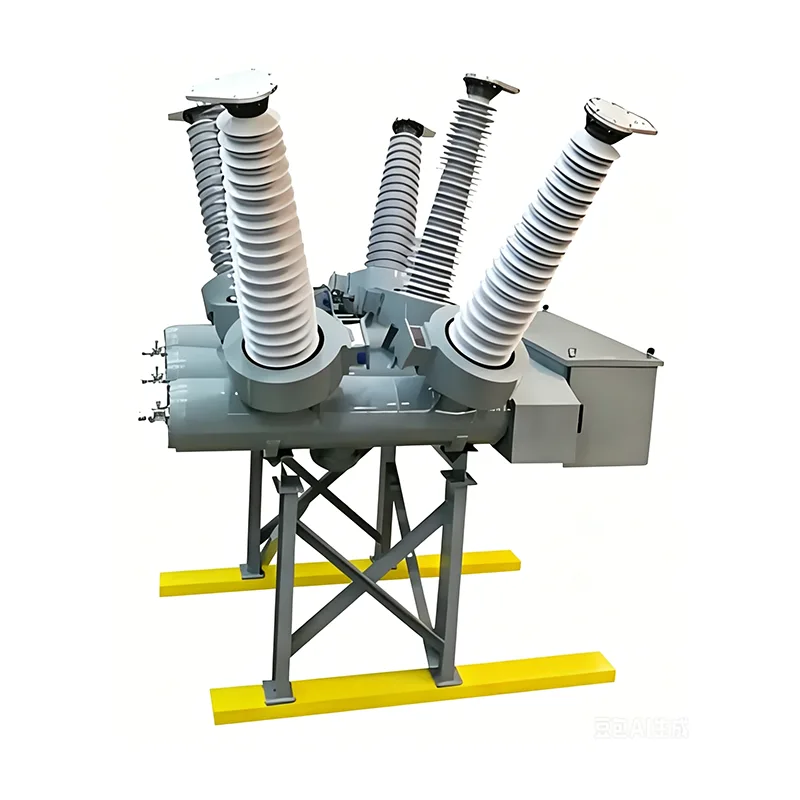
Selecting a High Voltage Circuit Breaker is one of the most consequential decisions in power system design, and getting it wrong can mean costly downtime, safety risks, and premature equipment failure. At Huixing, we have supported utilities, industrial plants, and EPC contractors through thousands of breaker selections, and the same core criteria consistently determine success. This guide distills that experience into a practical framework you can apply immediately.
Start With the Electrical Parameters
The first filter is always the system data. A High Voltage Circuit Breaker must be rated for the voltage, current, and fault level of the network it protects, with appropriate margins.
| Parameter | What to Confirm | Why It Matters |
|---|---|---|
| Rated voltage | System nominal voltage plus insulation coordination | Prevents dielectric breakdown |
| Rated current | Continuous load current with margin | Avoids thermal overload |
| Rated short-circuit breaking current | Maximum prospective fault current | Ensures safe fault interruption |
| Rated short-time withstand current | Fault duration (typically 1–3 s) | Protects against dynamic and thermal stress |
| Rated frequency | 50 Hz or 60 Hz | Affects arc interruption behavior |
Match the Interrupting Medium to the Duty
The interrupting technology shapes maintenance needs, footprint, and lifecycle cost. Huixing supplies multiple architectures so the choice follows the application rather than the other way around.
-
SF6 circuit breakers — compact, proven, and dominant at 72.5 kV and above; ideal for substations with limited space.
-
Vacuum circuit breakers — maintenance-light and well suited to medium-voltage distribution and frequent switching.
-
Dead-tank vs. live-tank designs — dead-tank offers grounding safety and easier CT integration; live-tank suits compact layouts.
-
GIS vs. AIS — gas-insulated switchgear for space-constrained or harsh environments; air-insulated for cost-sensitive open yards.
Evaluate Operating Mechanism and Maintenance
Spring-operated mechanisms are the industry default for reliability, while hydraulic and pneumatic options remain relevant for specific duty cycles. Confirm the mechanical endurance class (M1/M2) and electrical endurance class (E1/E2) against your switching frequency. A High Voltage Circuit Breaker that switches daily needs a very different endurance rating than one operated a few times per year.
Verify Standards, Testing, and Documentation
Insist on type-test certificates to IEC 62271-100 or IEEE C37.04/C37.06, plus routine tests and factory acceptance test reports. Huixing provides full type-test documentation, calibrated test data, and commissioning support so verification is straightforward rather than an afterthought.
Consider Lifecycle and Service Support
Spare parts availability, arc-control device replacement intervals, and local service capability often outweigh a small price difference. Ask for a lifecycle cost estimate covering 20–30 years of operation, including gas handling for SF6 units.
Frequently Asked Questions
What is the difference between a live-tank and dead-tank High Voltage Circuit Breaker? Live-tank breakers house the interrupting chamber at line potential and rely on external insulation, making them compact and economical for open substations; dead-tank breakers enclose the interrupter in a grounded metal tank, improving personnel safety, simplifying current transformer integration, and suiting harsh environments.
How do I determine the required short-circuit breaking capacity of a High Voltage Circuit Breaker? Calculate the maximum prospective fault current at the installation point from the network short-circuit study, then select a breaker whose rated short-circuit breaking current exceeds that value with margin, while also confirming short-time withstand current and peak withstand current match the protection coordination study.
How often should a High Voltage Circuit Breaker be inspected and maintained? Inspection intervals depend on duty: annual visual and functional checks are typical for critical substations, while full mechanical and electrical testing is commonly performed every 3–6 years or after a defined number of operations, always following the manufacturer's maintenance manual and applicable standards.
Conclusion
Choosing the right High Voltage Circuit Breaker comes down to disciplined matching of electrical ratings, interrupting technology, endurance class, certified testing, and long-term service support. Huixing combines type-tested products, transparent documentation, and application engineering to help you specify with confidence. Contact us today to discuss your project parameters and receive a tailored breaker recommendation from our engineering team.