

How Do Current Transformers Improve Electrical Measurement and Protection?
2026-06-11
Modern electrical systems require accurate current monitoring, reliable protection, and safe isolation between high-voltage circuits and measuring instruments. Whether in industrial plants, commercial buildings, power distribution networks, or renewable energy projects, Current Transformers (CTs) play a critical role in ensuring precise current measurement and dependable system protection.
This article explains how current transformers work, why they are essential, how to choose the right model, and how businesses can benefit from advanced CT solutions from Eton.
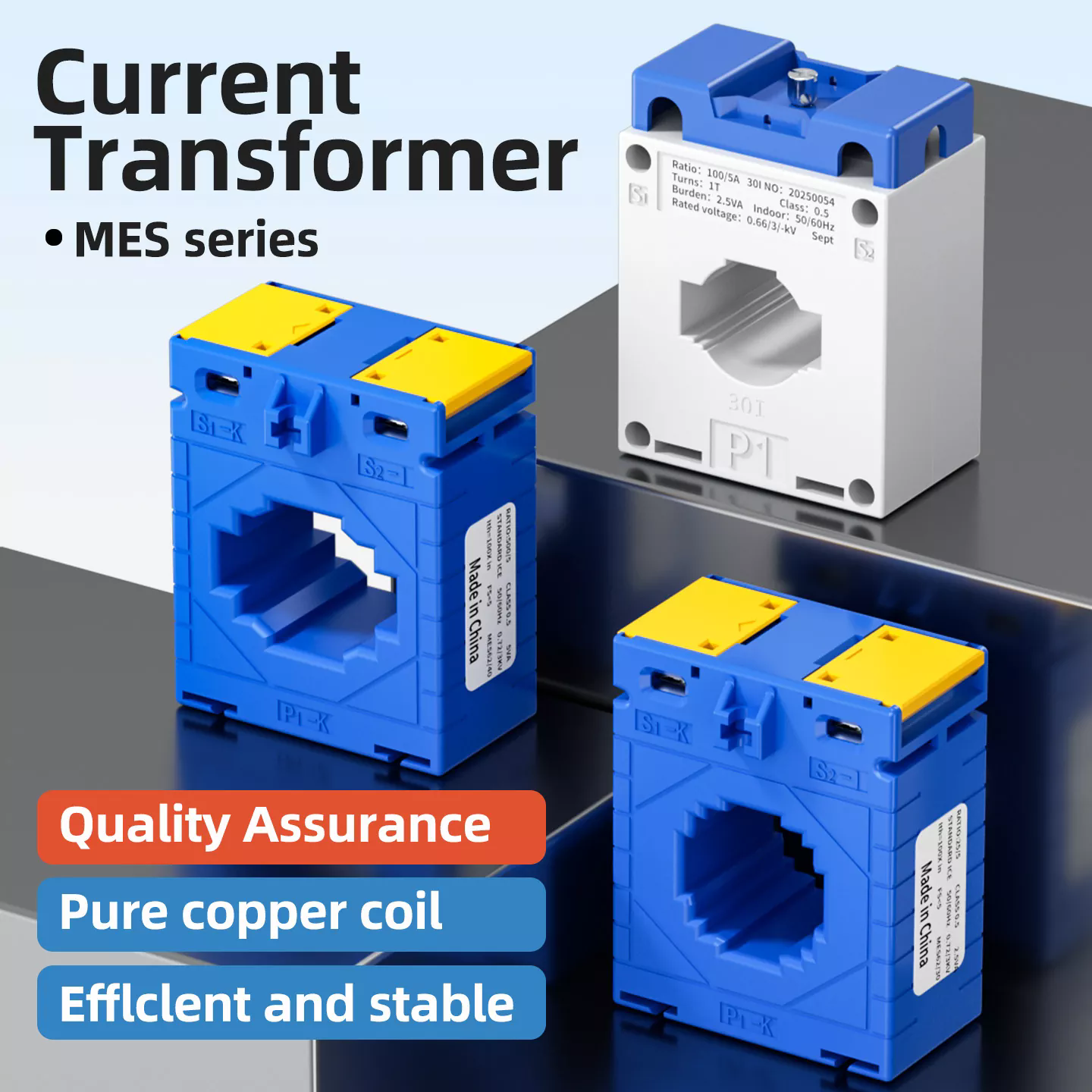
Article Summary
Current transformers are specialized devices designed to convert high primary currents into standardized low secondary currents for safe measurement, monitoring, and protection. They improve operational safety, enhance measurement accuracy, support energy management, and help protect valuable electrical equipment from faults and overload conditions.
Table of Contents
- What Is a Current Transformer?
- How Do Current Transformers Work?
- Why Are Current Transformers Important?
- Types of Current Transformers
- Common Applications of Current Transformers
- Key Benefits of Using Current Transformers
- How to Select the Right Current Transformer
- Common Installation Mistakes to Avoid
- Why Choose Eton Current Transformers?
- Frequently Asked Questions
What Is a Current Transformer?
A Current Transformer (CT) is an instrument transformer designed to reduce high electrical currents to a lower, manageable level while maintaining proportional accuracy. This allows measuring instruments, meters, relays, and monitoring devices to safely analyze current flow without being directly exposed to high current levels.
For example, a power system carrying 1000A can be measured through a CT that converts the current to a standardized 5A or 1A output. This greatly improves safety and enables the use of standardized measurement equipment.
| Parameter | Primary Side | Secondary Side |
|---|---|---|
| Current Level | High Current | Low Current |
| Safety Risk | Higher | Much Lower |
| Measurement Access | Direct Connection Required | Standard Instruments Compatible |
| Isolation | No Isolation | Electrical Isolation Provided |
How Do Current Transformers Work?
Current transformers operate based on electromagnetic induction. The primary conductor carrying electrical current passes through or around the CT core. As current flows through the conductor, a magnetic field is generated.
This magnetic field induces a proportional current in the transformer's secondary winding. The secondary current is then delivered to meters, relays, monitoring systems, or protection devices.
The relationship between primary and secondary current is determined by the turns ratio:
- 100:5 CT → 100A primary becomes 5A secondary
- 500:5 CT → 500A primary becomes 5A secondary
- 1000:1 CT → 1000A primary becomes 1A secondary
This proportional conversion enables precise monitoring while maintaining electrical isolation between high-power circuits and sensitive instrumentation.
Why Are Current Transformers Important?
Electrical systems often carry hundreds or thousands of amperes. Connecting measuring devices directly to these circuits would be dangerous and impractical.
Current transformers solve several major challenges:
- Provide safe electrical isolation
- Enable accurate current measurement
- Protect operators and equipment
- Support protective relay operation
- Improve energy monitoring and management
- Reduce instrument costs
- Enhance system reliability
Without CTs, many modern power distribution and protection systems would be difficult to implement safely.
Types of Current Transformers
Different applications require different CT designs. Understanding the available types helps ensure optimal performance.
| CT Type | Description | Typical Application |
|---|---|---|
| Window CT | Primary conductor passes through opening | Switchgear and panels |
| Bar-Type CT | Integrated primary conductor | High-current systems |
| Wound CT | Primary winding wrapped around core | Precision measurement |
| Split-Core CT | Openable core design | Retrofit installations |
| Protection CT | Optimized for relay operation | Fault protection systems |
| Metering CT | High measurement accuracy | Energy monitoring |
Common Applications of Current Transformers
Current transformers are used across a wide range of industries and electrical installations.
- Power generation facilities
- Substations and transmission networks
- Industrial manufacturing plants
- Commercial office buildings
- Data centers
- Renewable energy systems
- Smart grid infrastructure
- Motor control centers
- Energy management systems
- Building automation systems
As energy efficiency becomes increasingly important, CTs provide the accurate data needed for monitoring electrical consumption and identifying opportunities for optimization.
Key Benefits of Using Current Transformers
Investing in quality current transformers delivers numerous operational advantages.
| Benefit | Business Impact |
|---|---|
| Improved Safety | Reduces exposure to dangerous current levels |
| Accurate Measurement | Provides reliable electrical data |
| Equipment Protection | Supports fault detection and relay operation |
| Energy Management | Helps optimize power consumption |
| Cost Reduction | Minimizes downtime and maintenance costs |
| Regulatory Compliance | Supports industry electrical standards |
These benefits contribute directly to improved operational efficiency and reduced lifecycle costs.
How to Select the Right Current Transformer
Selecting the proper CT requires careful evaluation of application requirements.
Key considerations include:
- Primary Current Rating – Maximum system current.
- Secondary Current Rating – Typically 1A or 5A.
- Accuracy Class – Required measurement precision.
- Burden Capacity – Total connected load.
- Installation Space – Physical dimensions and mounting method.
- Frequency Requirements – Operating frequency compatibility.
- Environmental Conditions – Temperature, humidity, and contamination exposure.
- Protection or Metering Purpose – Different performance requirements.
A properly selected CT improves measurement reliability while preventing unnecessary replacement costs and operational issues.
Common Installation Mistakes to Avoid
Even a high-quality current transformer can experience performance issues if installed incorrectly.
- Using an incorrect CT ratio
- Exceeding burden limitations
- Incorrect polarity connections
- Improper grounding practices
- Leaving secondary circuits open during operation
- Installing CTs in unsuitable environmental conditions
- Ignoring calibration and maintenance requirements
Proper installation and regular inspection help maintain long-term accuracy and safety.
Why Choose Eton Current Transformers?
Eton provides high-performance current transformer solutions engineered for modern power systems. Designed for reliability, accuracy, and long service life, Eton products support a broad range of industrial, commercial, and utility applications.
Advantages of Eton Current Transformers include:
- Stable and accurate current measurement
- Reliable insulation performance
- Durable construction for demanding environments
- Wide selection of ratios and configurations
- Support for protection and metering applications
- Compliance with international quality requirements
- Professional technical support and customization capabilities
Whether you are upgrading an existing electrical system or designing a new installation, Eton can provide dependable CT solutions tailored to your project requirements.
Frequently Asked Questions
Q1: What is the primary purpose of a current transformer?
A current transformer reduces high current levels to standardized low current values for safe measurement and protection.
Q2: What happens if a CT secondary circuit is left open?
An open secondary can generate dangerously high voltages and may damage the transformer or create safety hazards.
Q3: What is the difference between metering CTs and protection CTs?
Metering CTs prioritize measurement accuracy during normal operation, while protection CTs are designed to remain effective during fault conditions.
Q4: How often should current transformers be inspected?
Inspection schedules vary by application, but periodic testing and maintenance are recommended to verify accuracy and insulation integrity.
Q5: Can current transformers be customized?
Yes. Manufacturers such as Eton can provide customized specifications, ratios, mounting options, and performance characteristics to meet specific project requirements.
Q6: Are current transformers suitable for renewable energy systems?
Absolutely. CTs are widely used in solar, wind, and energy storage installations for monitoring, protection, and energy management.
Conclusion
Current transformers are essential components in modern electrical infrastructure. By enabling safe current measurement, supporting protective systems, and improving energy monitoring capabilities, they help organizations achieve greater reliability, safety, and operational efficiency.
If you are looking for high-quality current transformer solutions with dependable performance and professional engineering support, Eton is ready to help. Contact us today to discuss your project requirements and discover the ideal current transformer solution for your application.