A ground mounted solar photovoltaic system offers a practical way to generate renewable electricity when suitable land is available. Unlike rooftop installations, it allows project planners to design the panel layout, mounting height, row spacing, and equipment arrangement around site conditions and energy requirements. However, successful projects depend on more than selecting efficient solar panels. Soil conditions, structural stability, drainage, shading, electrical design, installation quality, and long-term maintenance all influence system performance.
This guide explains how ground mounted solar PV systems work, how to assess a project site, which components deserve attention, and how to avoid common planning and operating problems. Whether you are evaluating a commercial solar installation or developing a larger photovoltaic project, understanding these fundamentals can help you make more informed technical and investment decisions.
-
01 / Fundamentals
Understanding Ground Mounted Solar PV Systems
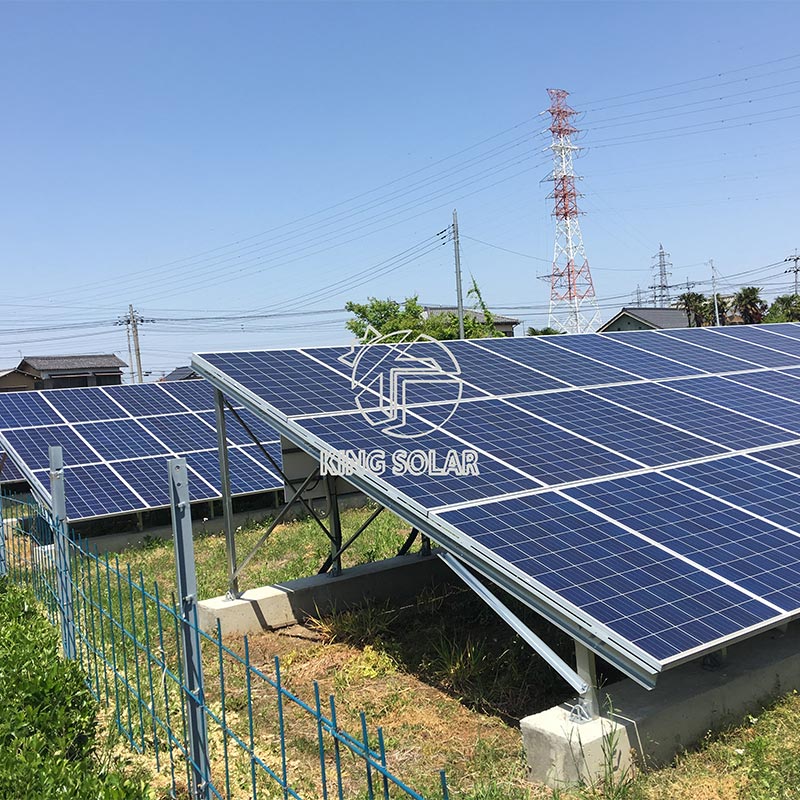
A ground mounted solar photovoltaic system is an electricity-generating installation in which photovoltaic modules are supported by structures anchored or otherwise secured to the ground. When sunlight reaches the solar cells, the cells convert solar radiation into direct current (DC) electricity. Inverters then convert that electricity into alternating current (AC) for use by compatible electrical loads or for export to the grid where permitted.
Depending on project requirements, the installation may supply a factory, warehouse, agricultural operation, commercial property, community energy project, or utility-scale power plant. The system can operate as a grid-connected installation, an off-grid system, or part of a hybrid arrangement incorporating battery storage.
Key principle: A productive solar installation is the result of coordinated design. Panel efficiency alone does not determine annual energy output; local weather, shading, system losses, orientation, equipment selection, and maintenance also matter.
Fixed-Tilt and Tracking Configurations
Most ground mounted arrays use either fixed-tilt structures or tracking systems. Fixed-tilt arrays hold the modules at a selected angle, offering a relatively straightforward mechanical arrangement. Solar trackers rotate the modules during the day to follow the sun and can increase energy production in suitable locations, but they also introduce additional mechanical components, controls, maintenance requirements, and capital costs.
The appropriate configuration depends on land availability, local solar conditions, electricity prices, financing assumptions, weather exposure, and the project's expected operating period.
02 / Project Advantages
Why Ground Mounted Solar Systems Are Worth Considering
Flexible Layout
Array dimensions, row spacing, and mounting orientation can be planned around available land and site-specific constraints.
Roof Independence
Projects can proceed without relying on rooftop strength, roof age, waterproofing condition, or available roof area.
Accessible Maintenance
Well-planned access routes can simplify inspections, vegetation control, equipment servicing, and module cleaning.
Scalable Capacity
Suitable sites may accommodate phased expansion when land, grid capacity, permits, and electrical infrastructure allow it.
More Control Over System Orientation
Ground mounted installations generally offer more freedom to optimize panel direction and tilt than buildings with fixed roof geometry. This flexibility can help project designers reduce shading and improve the timing of electricity generation. However, the best layout must be determined from local solar data and a site-specific energy model rather than a universal tilt-angle rule.
Important Trade-Offs to Consider
Ground mounted systems require suitable land, foundations or ground-support solutions, site preparation, and appropriate cable routing. They may also involve fencing, drainage improvements, access roads, and land-use approvals. These costs should be compared with the structural work, roof preparation, and other requirements that may apply to rooftop projects.
03 / Equipment Guide
Essential Components of a Ground Mounted Solar Photovoltaic System
Understanding each major component helps buyers evaluate proposals and identify the specifications that affect reliability, compatibility, and maintenance.
|
Component
|
Main Function
|
Key Considerations
|
|
PV modules
|
Convert sunlight into DC electricity.
|
Power rating, efficiency, degradation characteristics, warranties, and environmental suitability.
|
|
Mounting structure
|
Supports modules and maintains the intended geometry.
|
Structural loads, corrosion resistance, installation method, and design life.
|
|
Foundations
|
Transfer structural forces into the ground.
|
Soil conditions, groundwater, uplift resistance, settlement, and installation constraints.
|
|
Inverters
|
Convert DC electricity into usable AC electricity.
|
Capacity, operating voltage, efficiency, protection functions, and service access.
|
|
Electrical cables and protection
|
Transfer electricity and help protect the installation.
|
Current capacity, insulation, routing, environmental exposure, and applicable electrical codes.
|
|
Monitoring equipment
|
Tracks system output and operational conditions.
|
Data availability, fault alerts, communications, and performance reporting.
|
|
Optional battery storage
|
Stores electricity for later use.
|
Required backup duration, power rating, usable energy, safety, and lifecycle cost.
|
All components must work together as a coordinated system. For example, selecting high-power modules without confirming inverter compatibility or structural loading can create avoidable design changes. Similarly, a durable mounting structure cannot compensate for inadequate drainage or incorrectly sized electrical protection.
04 / Site Planning
How to Evaluate a Site Before Installation
Site assessment is one of the most important stages of a ground mounted solar project. Problems discovered after construction begins can lead to redesigns, additional foundation work, schedule delays, or reduced energy production.
1. Assess Solar Access and Shading
Identify trees, buildings, utility structures, terrain changes, and other obstacles that could shade the modules. Shading patterns should be evaluated across different seasons because the sun's position changes throughout the year. Even limited shading can affect production, depending on the module arrangement and electrical configuration.
2. Investigate Soil and Ground Conditions
Foundation selection should be based on appropriate geotechnical information and structural calculations. Soil bearing capacity, soil variability, groundwater, corrosive conditions, frost depth where relevant, and potential settlement can influence the suitable foundation type.
Driven piles may be practical in some ground conditions, while other locations may require ground screws, concrete foundations, or engineered alternatives. No single foundation solution is suitable for every project.
3. Evaluate Drainage and Flood Exposure
Review the site's natural drainage paths, surface-water flow, erosion risks, and potential flood exposure. Poor drainage can undermine foundations, damage access roads, expose cables, and make routine maintenance difficult. Drainage measures should be integrated into the overall site design rather than treated as an afterthought.
4. Review Weather and Environmental Loads
Wind, snow, hail, temperature variation, and corrosive environments can affect structural and electrical equipment selection. Engineers should apply the relevant local design criteria and consider the site's exposure, including extreme weather conditions.
5. Confirm Land Use and Grid Access
Check land ownership or lease terms, planning restrictions, environmental requirements, access for construction vehicles, and the feasibility of grid connection. Grid capacity, interconnection costs, and approval timelines can substantially affect project economics.
Practical tip: Complete the site survey, preliminary energy assessment, geotechnical review, and grid feasibility study before finalizing the system layout or ordering major equipment.
05 / Engineering
How to Design an Efficient Ground Mounted Solar System
System design must balance energy production, structural safety, construction practicality, equipment compatibility, and lifecycle cost. A design that maximizes the number of modules may not deliver the best financial result if it creates excessive shading, complicated access, or expensive foundations.
Determine the Required System Capacity
Begin with the site's electricity consumption, demand profile, available land, and intended energy arrangement. For commercial and industrial projects, hourly or interval electricity data can help determine whether solar production aligns with daytime operations.
The nominal DC capacity is commonly expressed in kilowatts-peak (kWp) or megawatts-peak (MWp). Actual electricity production depends on irradiance, temperature, shading, orientation, equipment losses, and downtime.
Optimize Row Spacing and Tilt
Rows must be spaced to limit unwanted shading while making efficient use of the available land. The required spacing depends on panel dimensions, tilt, row geometry, latitude, terrain, and the desired production profile. Wider spacing may improve solar access and maintenance access but reduce installed capacity per unit of land.
Choose a Suitable Mounting Structure
Mounting structures should be engineered for the project's site conditions and intended operating life. Material selection may include galvanized steel, aluminum, or a combination of materials, depending on structural requirements, corrosion exposure, budget, and compatibility.
Designers should account for wind pressure and uplift, snow loads where applicable, thermal movement, connection details, fastener durability, and foundation interaction. Structural calculations and installation tolerances should be reviewed before construction.
Match Modules, Inverters, and Electrical Protection
Electrical design should verify module string voltage across the expected temperature range, inverter operating limits, current ratings, cable sizing, grounding or earthing, overcurrent protection, isolation, and surge protection. The final design must comply with applicable local codes and utility interconnection requirements.
Plan for Maintenance from the Beginning
Allow suitable access to module rows, inverters, junction boxes, and other serviceable equipment. Plan vegetation management, drainage inspections, cable protection, monitoring access, and safe working routes. A maintenance-friendly layout can reduce operating disruption over the life of the installation.
06 / Construction
The Installation Process Step by Step
A structured construction process helps control quality, safety, and schedule. The exact sequence depends on project size, foundation type, local requirements, and equipment design.
-
Complete feasibility studies and approvals.
Confirm the site boundary, energy objectives, geotechnical findings, drainage strategy, grid connection, permits, and construction plan.
-
Prepare the site.
Carry out approved clearing, grading, access-road preparation, drainage works, and site marking while limiting unnecessary soil disturbance.
-
Install foundations.
Construct or install the specified foundation system. Verify alignment, embedment, installation records, and required quality checks.
-
Assemble mounting structures.
Install structural members, rails, brackets, and fasteners according to approved drawings and manufacturer instructions.
-
Install modules and electrical equipment.
Mount the PV modules and install inverters, cables, combiner equipment where required, protective devices, and monitoring hardware.
-
Inspect, test, and commission.
Complete the applicable mechanical and electrical inspections, polarity and insulation checks, grounding verification, protection tests, and inverter commissioning.
-
Document and hand over the system.
Provide as-built drawings, equipment information, test records, operating instructions, warranty documentation, and a practical maintenance schedule.
Construction and commissioning should be performed by appropriately qualified personnel. Electrical systems must not be energized until the required inspections, safety checks, approvals, and utility coordination have been completed.
07 / Financial Planning
Understanding Project Costs and Energy Performance
The cost of a ground mounted solar photovoltaic system depends on much more than module prices. Land preparation, foundations, mounting structures, electrical equipment, installation labor, grid interconnection, engineering, permits, and financing can all contribute to total project expenditure.
Major Cost Factors
|
Cost Category
|
What Can Influence It?
|
Planning Approach
|
|
Site preparation
|
Terrain, soil conditions, drainage, access, and vegetation.
|
Use site investigations to identify civil works early.
|
|
Mounting and foundations
|
Structural loads, material choice, foundation design, and corrosion exposure.
|
Compare engineered solutions based on total installed cost and durability.
|
|
PV modules and inverters
|
Capacity, technology, warranties, electrical configuration, and supplier terms.
|
Compare specifications and lifecycle value, not purchase price alone.
|
|
Electrical infrastructure
|
Cable distances, transformer requirements, protection, and grid upgrades.
|
Assess grid connection early and optimize equipment placement.
|
|
Operations and maintenance
|
Cleaning needs, vegetation, inspections, spare parts, and monitoring.
|
Estimate recurring expenses over the expected operating period.
|
Estimate Annual Electricity Production
A preliminary production estimate can be expressed as:
Estimated annual energy (kWh) = Installed capacity (kWp) × Specific yield (kWh/kWp/year)
For example, a hypothetical 100 kWp system with an assumed specific yield of 1,200 kWh/kWp/year would generate approximately 120,000 kWh annually before any adjustments not already included in the yield estimate.
This example is illustrative only. Actual yield varies by location, weather, system configuration, shading, equipment performance, and operating conditions.
Evaluate Financial Returns Carefully
Project economics should account for electricity prices, self-consumption, export compensation, curtailment, system degradation, maintenance, inverter replacement assumptions, financing, insurance, and applicable incentives. Simple payback can provide an initial comparison, but it does not capture the full timing of cash flows or the value of electricity over the project's operating life.
Request a transparent financial model with clearly stated assumptions. Sensitivity analysis for energy yield, capital costs, electricity prices, and financing rates can help show how the investment performs under different conditions.
08 / Long-Term Operation
Maintenance Strategies for Long-Term Reliability
Once commissioned, a ground mounted solar installation needs a planned operation and maintenance program. Routine attention helps identify developing faults, maintain safe access, and protect expected energy production.
Regular Inspection and Cleaning
Inspect modules for visible damage, unusual discoloration, debris accumulation, and other abnormalities. Cleaning frequency should reflect local dust, pollen, bird activity, rainfall, and observed performance. Cleaning methods must follow module manufacturer guidance and site safety procedures.
Vegetation and Drainage Management
Control vegetation to prevent shading, preserve access routes, and reduce avoidable fire or pest risks where relevant. Inspect drainage channels, erosion-prone areas, and exposed foundations after heavy rainfall or significant weather events.
Electrical and Structural Checks
Qualified personnel should inspect electrical connections, cables, protective devices, grounding systems, inverter status, and monitoring alerts according to the maintenance plan. Structural inspections should look for corrosion, loose or damaged components, foundation movement, and signs of abnormal loading.
Monitor Performance Trends
Monitoring data can help distinguish normal weather-related changes from possible equipment or operational issues. Compare actual output with expected production while considering irradiance, temperature, shading, downtime, and data quality. Investigate persistent deviations rather than relying on a single day's generation.
Maintenance reminder: Inspection intervals should be based on equipment requirements, site conditions, local regulations, and operating experience. After severe weather, a qualified inspection may be appropriate even if the next routine service is not yet due.
09 / Risk Prevention
Common Problems and How to Prevent Them
Problem 1: Choosing a Site Without Adequate Investigation
Unfavorable soil, poor drainage, shading, or limited grid capacity can undermine project economics. Prevent this by completing site surveys and technical feasibility assessments before committing to the final design.
Problem 2: Focusing Only on Initial Equipment Prices
Low-cost components may create additional maintenance demands or fail to meet environmental requirements. Compare warranties, certifications, technical specifications, availability of replacement parts, and expected lifecycle costs.
Problem 3: Underestimating Wind and Weather Loads
Mounting structures must be designed for the actual site and applicable engineering standards. Do not rely on generic structural assumptions or treat installation hardware as interchangeable without technical verification.
Problem 4: Ignoring Maintenance Access
Overcrowded layouts can complicate inspections, vegetation control, and equipment replacement. Include service routes and safe working space in the original site plan.
Problem 5: Overlooking Electrical Compatibility
Incorrect voltage calculations, undersized cables, inadequate protection, or unsuitable grounding arrangements can introduce performance and safety risks. Require qualified electrical design, installation, inspection, and commissioning.
Problem 6: Making Unrealistic Production Forecasts
Annual output estimates should reflect local weather data and system losses. Use a documented simulation or engineering estimate, and test the financial model against reasonable variations in production and electricity prices.
10 / Industry Applications
Where Ground Mounted Solar PV Systems Can Create Value
Ground mounted systems can support a wide range of electricity needs when the land, grid infrastructure, and project economics are suitable.
Industrial and Manufacturing Facilities
Factories with substantial daytime electricity consumption may use solar generation to offset part of their grid demand. Matching generation with the facility's load profile is important, especially for operations with variable production schedules.
Commercial Properties and Logistics Centers
Warehouses, distribution centers, and business parks may consider ground mounted systems when nearby land is available and rooftop installations are limited by structural or space constraints.
Agricultural Operations
Farms may use solar electricity for water pumping, processing, storage, and other electrical loads. Projects should account for agricultural land use, machinery access, irrigation, soil protection, and the operational needs of the property.
Utility-Scale Solar Projects
Large solar farms require coordinated planning for array layout, foundations, cable collection, substations, grid connection, site security, monitoring, and environmental management. Design and construction should follow applicable standards and project-specific engineering requirements.
For all applications, the most suitable project is one that aligns system capacity with actual energy needs, site constraints, regulatory requirements, and long-term operating plans.
11 / Frequently Asked Questions
Frequently Asked Questions About Ground Mounted Solar Photovoltaic Systems
1. What is a ground mounted solar photovoltaic system?
It is a solar electricity installation in which PV modules are supported by structures installed on the ground. The system typically includes solar modules, mounting structures, foundations, inverters, electrical protection, cabling, and monitoring equipment.
2. How much land is required for a ground mounted solar PV system?
Land requirements depend on installed capacity, module dimensions, tilt, row spacing, terrain, access roads, drainage, setbacks, and electrical infrastructure. A site-specific layout is necessary to estimate the land area accurately.
3. Is a ground mounted system more efficient than a rooftop system?
Not automatically. Ground mounted systems often allow greater control over orientation, tilt, ventilation, and maintenance access. Actual energy yield depends on site conditions, equipment, shading, and system design. A comparison should use equivalent capacity and realistic production assumptions.
4. Which foundation is best for a ground mounted solar installation?
The appropriate foundation depends on soil properties, groundwater, structural loads, corrosion conditions, installation equipment, and local engineering requirements. Driven piles, ground screws, concrete foundations, and other engineered solutions may be suitable in different circumstances.
5. Can a ground mounted solar PV system operate during a power outage?
A conventional grid-connected system generally disconnects during a grid outage unless it has an appropriately designed backup arrangement. Battery storage, compatible inverters, transfer equipment, and compliant electrical design may enable selected loads to operate during an outage.
6. How often should ground mounted solar panels be maintained?
Maintenance frequency depends on the site environment, equipment instructions, local requirements, and operating conditions. Typical programs include periodic visual inspections, performance monitoring, vegetation control, drainage checks, and condition-based cleaning.
7. What affects the power output of a ground mounted solar system?
Important factors include solar irradiance, module temperature, shading, orientation, tilt, dust accumulation, electrical losses, inverter performance, system downtime, and equipment degradation over time.
8. Are solar tracking systems worth the additional investment?
Tracking systems can increase energy generation in suitable locations, but their value depends on additional equipment costs, site conditions, electricity prices, maintenance, and the timing of energy production. A project-specific financial assessment should compare the expected additional revenue with the added lifecycle costs.
9. What documents should buyers request from a solar project supplier?
Depending on the scope of supply, useful documents include technical datasheets, engineering drawings, material specifications, structural calculations, electrical diagrams, quality records, warranty terms, installation instructions, inspection results, and maintenance recommendations.
10. How can a project owner estimate the return on investment?
Estimate annual electricity generation, determine the value of self-consumed and exported electricity, and account for installation costs, operating expenses, financing, degradation, replacement components, and applicable incentives. Use sensitivity analysis to understand how changes in assumptions affect the result.
Final Thoughts
Build a Ground Mounted Solar Project Around Performance and Reliability
A well-designed ground mounted solar photovoltaic system can provide a practical source of renewable electricity for commercial, industrial, agricultural, and utility-scale applications. Its long-term value depends on the quality of early planning, the suitability of the site, the durability of the mounting structure, the compatibility of electrical equipment, and the effectiveness of ongoing maintenance.
Before investing, evaluate the complete project rather than focusing on individual components. Confirm land suitability, foundation requirements, energy demand, expected generation, grid access, installation quality, and lifecycle costs. These steps create a stronger basis for reliable operation and more informed purchasing decisions.
For solar mounting solutions and project-related product inquiries, Kingsolar is a starting point for learning more about the company and discussing your requirements with its team.
Planning Your Next Solar Project?
Looking for reliable solar mounting solutions for your ground mounted photovoltaic project? Contact Kingsolar to discuss your project requirements, site conditions, technical specifications, and sourcing needs. Share your project details to help the team understand your application and explore suitable solutions.
Contact Us