

How Automatic Transfer Switches Ensure Uninterrupted Power Supply for Critical Systems
2026-06-11
Abstract
Automatic Transfer Switches (ATS) are essential components in modern power infrastructure, ensuring seamless transition between primary and backup power sources. In environments where even a second of downtime can cause operational failure, ATS technology plays a decisive role in stability, safety, and continuity. This article explains how Automatic Transfer Switches work, their types, applications, selection criteria, and maintenance considerations. It also highlights how Laijian Electric delivers reliable ATS solutions designed for industrial, commercial, and emergency systems.
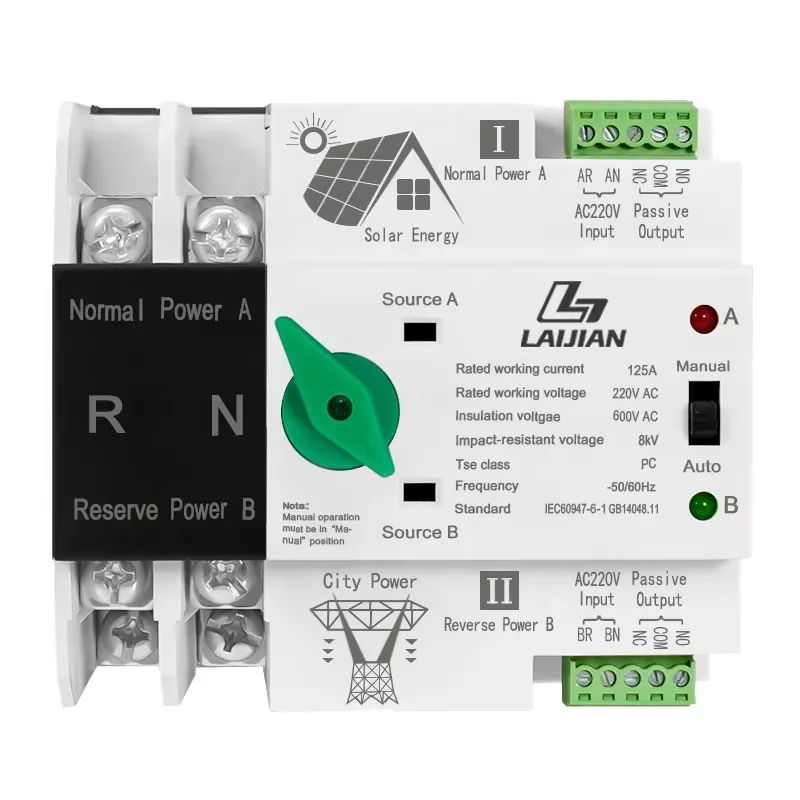
Table of Contents
- 1. Introduction to Automatic Transfer Switches
- 2. What Are Automatic Transfer Switches?
- 3. How Automatic Transfer Switches Work
- 4. Types of Automatic Transfer Switches
- 5. Key Applications
- 6. How to Choose the Right ATS
- 7. Installation and Maintenance
- 8. Common Issues and Troubleshooting
- 9. Benefits Overview
- 10. Frequently Asked Questions
- 11. Conclusion
1. Introduction to Automatic Transfer Switches
Modern power systems rely heavily on continuity. Hospitals, data centers, manufacturing plants, and communication networks cannot afford interruptions. This is where Automatic Transfer Switches become indispensable. They act as intelligent switching devices that automatically transfer electrical load between the main utility power and a backup generator or secondary power source when a failure occurs.
Without ATS systems, manual intervention would be required, which introduces delays, operational risks, and potential equipment damage. Laijian Electric has developed robust ATS solutions designed for high-speed response and stable performance under demanding conditions.
2. What Are Automatic Transfer Switches?
An Automatic Transfer Switch is an electrical device that monitors power supply conditions and switches the load between two power sources. Typically, it connects a facility to a primary utility supply and a backup generator system.
- Monitors voltage and frequency continuously
- Detects power failure or instability
- Automatically switches to backup source
- Restores connection to primary source when stable
In essence, ATS ensures uninterrupted electricity flow without requiring human intervention.
3. How Automatic Transfer Switches Work
The working principle of ATS is based on real-time monitoring and automatic switching logic. When the system detects abnormal conditions such as voltage drop or total outage, it initiates a controlled transfer sequence.
- Monitoring Phase: The ATS continuously checks utility power quality.
- Detection Phase: If abnormal voltage or outage is detected, it triggers a response.
- Start Command: The backup generator is activated automatically.
- Transfer Phase: Load is switched from utility to generator.
- Re-transfer Phase: Once utility power stabilizes, load is switched back.
This seamless process typically occurs within seconds, minimizing disruption to connected systems.
4. Types of Automatic Transfer Switches
Different operational environments require different ATS configurations. Below is a structured overview:
| Type | Description | Best Use Case |
|---|---|---|
| Open Transition ATS | Break-before-make switching method | General commercial systems |
| Closed Transition ATS | Make-before-break switching for zero interruption | Hospitals, data centers |
| Delayed Transition ATS | Introduces a short delay between transfers | Industrial equipment protection |
| Static Transfer Switch | Uses solid-state components for ultra-fast switching | High-sensitivity systems |
5. Key Applications
Automatic Transfer Switches are widely used across industries where uninterrupted power is essential.
- Data centers and cloud infrastructure facilities
- Hospitals and medical equipment systems
- Industrial manufacturing plants
- Telecommunication networks
- Commercial buildings and airports
Laijian Electric provides ATS systems tailored for both heavy-duty industrial applications and precision-critical environments.
6. How to Choose the Right ATS
Selecting the correct ATS requires careful evaluation of system requirements and operational risks.
- Load Capacity: Ensure ATS supports total connected load
- Switching Speed: Critical for sensitive equipment
- Type of Transition: Open or closed depending on continuity needs
- Environment: Temperature, humidity, and installation conditions
- Control System: Manual override and remote monitoring capability
Laijian Electric offers consultation to help clients select optimized ATS configurations based on operational demands.
7. Installation and Maintenance
Proper installation ensures long-term reliability of Automatic Transfer Switches. Installation should always be performed by qualified electrical engineers.
Installation Guidelines:
- Ensure correct grounding and wiring layout
- Verify compatibility with generator systems
- Test transfer functionality before commissioning
Maintenance Practices:
- Regular inspection of contactors and relays
- Software diagnostics for smart ATS units
- Periodic load testing
8. Common Issues and Troubleshooting
Even high-quality ATS systems may encounter operational issues over time. Below are common problems and solutions:
- Failure to Transfer: Often caused by control circuit malfunction
- Delayed Switching: May indicate worn mechanical components
- False Power Detection: Sensor calibration issues
- Generator Start Failure: External generator fault or wiring issue
Routine maintenance significantly reduces these risks and ensures system reliability.
9. Benefits Overview
| Benefit | Description |
|---|---|
| Power Continuity | Ensures uninterrupted energy supply during outages |
| Operational Safety | Reduces risk of human error during power switching |
| System Automation | Fully automated switching without manual intervention |
| Equipment Protection | Prevents damage caused by sudden power loss |
10. Frequently Asked Questions
Q1: How fast do Automatic Transfer Switches operate?
Most ATS systems operate within seconds, depending on configuration and load type.
Q2: Can ATS be used with any generator?
Yes, but compatibility must be ensured based on voltage and capacity ratings.
Q3: What is the lifespan of an ATS?
With proper maintenance, ATS systems can last 10–20 years or more.
Q4: Does Laijian Electric provide customized ATS solutions?
Yes, Laijian Electric designs tailored ATS systems based on industrial and commercial requirements.
11. Conclusion
Automatic Transfer Switches are vital for ensuring uninterrupted power supply in modern infrastructure. They eliminate downtime risks, improve safety, and enhance system resilience across industries. Whether used in healthcare, industry, or digital infrastructure, ATS technology remains a cornerstone of reliable power management systems.
Laijian Electric continues to innovate in the field of power distribution and switching systems, offering durable and intelligent ATS solutions that meet global operational standards.
For reliable Automatic Transfer Switch solutions, Laijian Electric is ready to support your project needs. contact us today to discuss your requirements and get a customized solution.